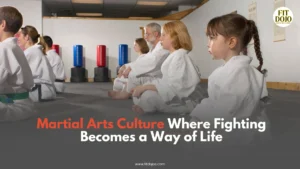
Martial arts culture is much more than the art of punching, kicking, grappling, and self-defence. It involves gaining discipline, respect, confidence, fitness, self-control, and even a mindset that could apply in life as well.
If you are considering practicing karate, mixed martial arts, or any other kind of combat sports for yourself or your kids, knowing about the culture of martial arts is really important. This blog will take you through the culture that forms martial arts.
What Is Martial Arts Culture?
The culture of martial arts refers to the values, practices, attitudes, ways of training, and social dynamics that characterize the art of martial arts. They impact how students interact with instructors, training partners, opponents, and themselves.
There is variation in martial arts cultures because different types of martial arts can have their own unique set of customs, but many academies tend to have common elements, such as respect, dedication, responsibility, perseverance, and self-control.
Adults who want structured training can explore martial arts classes for adults, while families who want to train together may prefer parent and kids martial arts programs.
Martial Arts Culture Is Built on More Than Fighting
Martial arts from the outside may appear very aggressive. You see punching, kicking, takedown, submission, sparring, and competition. In the inside, in a good martial arts school, it has an entirely different meaning.
Students learn or know when they should apply the techniques, when not to apply, and how to keep their composure. The ability to defend oneself should also mean wisdom not to get into unnecessary fights.
How Martial Arts Skills Develop Step by Step
- Learn the technique. Understand the correct movement, positioning, and purpose.
- Practice with control. Repeat the movement safely with a partner, pad, or bag.
- Test yourself gradually. Apply skills under increasing pressure when appropriate.
- Accept correction. Listen to your instructor and adjust without letting ego get in the way.
- Keep improving. Return to training knowing there is always another skill to develop.
Students who enjoy striking-focused training may also be interested in kickboxing classes, which combine technical skill, conditioning, coordination, and controlled partner work.
Martial Arts Traditions and Why They Still Matter
Martial art traditions range from those that have been around for centuries to those that have emerged quite recently. The significance of such these varies from tradition to tradition, from school to school, and from country to country, but traditions tend to bring discipline and deep respect.
Bowing, Uniforms, Belts, and Training Rituals
When doing karate and other traditional forms of martial arts, people usually bow upon entering the practice are or before training with another person. It normally symbolizes respect.
Wearing training uniforms is also practical for certain reasons. This practice is helpful because it minimizes distractions and helps students understand that everybody goes there to learn. If you are curious about their purpose, sizing, and traditions, this guide to martial arts uniforms explains what beginners should know.
BBelts and different rankings are notable achievement. They may inspire beginners, however, good dojo should teach people that a belt signifies achievement and not dominance.
Gyms of mixed martial arts may be less ritualistic, yet they definitely have their unique traditions. Some of them are: touching gloves, respecting each others, listening to instructor, controlling intensity, helping beginners.
The details may change between styles, but the principle remains the same: how you train matters as much as what you learn.
Martial Arts Philosophy: Strength With Responsibility
At the heart of martial arts philosophy is an important idea: physical skill should develop alongside mental control.
Learning to fight does not mean looking for opportunities to fight. Good training teaches students to stay composed when they are tired, frustrated, uncomfortable, or under pressure.
Discipline Comes From Repetition
Discipline is not created by one difficult workout. It develops when you train consistently, especially on days when motivation is low.
For adults, that can mean building a healthier routine and becoming more comfortable with challenges. For children, regular training can reinforce listening, patience, persistence, and following instructions.
Parents who want to understand this part of training in more depth can read about how karate develops discipline.
Confidence Comes From Evidence
Real confidence is different from simply telling yourself to be confident. Martial arts gives you evidence.
You learn a movement that once seemed impossible. You complete a difficult class, improve your fitness, perform a technique under pressure, or earn your next rank. Those small successes accumulate, and confidence becomes something you have built rather than something you are pretending to feel.
Martial Arts Etiquette Every Beginner Should Know
You do not need to understand every rule before your first class. A good instructor will explain what is expected, but understanding basic martial arts etiquette can make your first experience much easier.
- Arrive on time. Give yourself enough time to change and prepare before class begins.
- Listen when the instructor is teaching. Technical details matter for both learning and safety.
- Respect your training partners. They are helping you improve, not serving as targets.
- Control your strength. Training is not about proving that you can hurt someone.
- Keep yourself and your equipment clean. Hygiene is especially important when people train at close range.
- Ask questions. Beginners are expected to need explanations.
- Leave your ego outside. Everyone gets corrected, makes mistakes, and experiences difficult training days.
Parents preparing a child for their first lesson may also find this guide on what parents should know before a first martial arts class helpful.
Why Martial Arts Culture Appeals to Adults and Families
People rarely walk into a martial arts school for exactly the same reason. Some want practical self-defense, some want a more engaging workout, and others want greater confidence or discipline.
Fitness That Has a Purpose
Martial arts training can develop cardiovascular fitness, strength, coordination, mobility, balance, and reaction time. Instead of exercising only to burn calories or complete repetitions, you are developing a practical skill at the same time.
Self-Defense and Awareness
Self-defense is not only about physical techniques. Responsible instruction should include awareness, avoiding dangerous situations, understanding distance, staying calm, and recognizing when escaping is the smartest option.
No martial art can guarantee safety in every situation. Training can, however, give you useful physical skills and greater familiarity with pressure. Beginners comparing systems can also explore different karate styles for self-defense.
A Shared Activity for Parents and Children
Martial arts can become something families share. A child may start karate first, then a parent becomes interested after watching classes and seeing the benefits firsthand.
Younger students can develop their foundations through karate programs for little kids.
How to Choose the Right Martial Arts School
The school you choose will shape your experience of martial arts culture more than any article or video can. Before joining, visit the facility and pay attention to what actually happens during class.
What to Look for Before Joining
- Beginners are treated patiently and respectfully.
- Experienced students demonstrate control rather than intimidation.
- Instructors explain techniques clearly.
- Safety rules are visible and consistently enforced.
- Children receive appropriate supervision.
- Fees, equipment requirements, and expectations are explained clearly.
- The environment feels challenging without feeling hostile.
Do not choose a school simply because it promises fast results or has impressive trophies on the wall. A quality program should be able to explain its teaching approach and help you understand whether its classes fit your goals.
If you are looking specifically for local training, explore karate in Rockdale, or private martial arts classes.
Martial Arts Culture Becomes Part of Everyday Life
The fact that martial arts classes are rarely held in a dojo or gym is what makes them so fascinating. You develop the ability to accept judgment without taking it personally, persevere when things seem to be moving slowly, and realize that being prepared is the key to confidence.
You also discover that it's not very remarkable to have strength without control. That is the deeper significance of martial arts culture..
Whether you are an adult looking for confidence, discipline, fitness, or self-defense, a complete beginner interested in karate or mixed martial arts, or a parent considering training alongside your child, the first step is simple.
Learn more about the school and its approach on the Fit Dojo About Us page, then visit a class and experience the atmosphere for yourself.
Ready to Experience Martial Arts for Yourself?
Reading about martial arts can help you understand the culture, but the best way to know whether a school is right for you is to step onto the mat.
Whether your goal is better fitness, greater confidence, practical self-defense, stronger discipline, or an activity your family can enjoy together, an introductory class gives you the chance to meet the instructors and experience the training environment firsthand.
Book your martial arts trial class today and discover what training can become when fighting skills develop into a way of life.