How a Martial Arts Mindset Builds Confidence Beyond the Dojo


FIT DOJOS
Expert Team,
FITDOJOS.COM
Whenever things are going right, it's common and how easily people talk about confidence. The true test occurs when you are worried, under pressure, confronted with criticism, or doing things you are not entirely expert in. A martial arts mindset makes it easier to deal with those situations with more control since martial arts instruct you to address difficult situations rather than completely avoiding them.
Martial arts helps you gain confidence by repeatedly showing your ability to learn, adapt, recover, and develop. By repeatedly showing your ability to learn, adapt, recover, and develop, martial arts helps you gain confidence. Children in school, teenagers struggling with pressure, and adults experiencing difficulties at work, home, or in daily life can all benefit from such lessons.
The punches, kicks, blocks, and techniques matter, but some of the strongest lessons happen inside your thinking. What you learn during training can shape how you respond to challenges long after you leave the dojo.
What Is a Martial Arts Mindset?
A martial arts mindset means method tackling difficult situations with patience, discipline, awareness, respect, and determination. It does not imply that you are unbeatable. There will undoubtedly be someone who is stronger, quicker, knowledgeable, or just more skilled in a certain things.
You develop the ability to perceive something as a chance to get better rather than as a threat. Knowing what a dojo is for children can also assist parents and younger students realize that the training area is about far more than just being taught how to fight.
More Than Learning How to Fight
When a beginner walks into a dojo, they may assume that martial arts are mostly about physical abilities. Training gradually promotes a new way of thinking. When something doesn't work right away, you learn to pay attention closely, repeat challenging tasks, accept errors, manage your frustration, and keep trying.
You eventually incorporate those behaviors into your response to problems outside of training. The martial arts spirit is more about improving yourself than it is about proving yourself to others.
Martial arts does not teach you to fear challenges. It teaches you how to meet them.
How a Martial Arts Mindset Builds Real Confidence
Real confidence doesn't mean trying to act so that you don't get nervous at all. It results from realizing that anxiety need not influence your actions. Martial arts provide ways to experience that time and again.
During the first class, a student could find it difficult to memorize a different combination. The movements start to seem smoother after a few lessons. When the same student faced a more difficult style later on and recalled, "I struggled before, and I figured it out."
Small Wins Become Evidence
When you have proof that you can get better, your confidence increases. That proof could be a young child's ability to recall a method without any guidance. After finishing an exam they were nervous about, a teenager may feel more confident. An adult may observe that something that made them tired a few months ago now seems manageable.
These accomplishments don't have to be outstanding. Every little accomplishment conveys the same message: If I keep trying, I can learn things that are hard.
For younger students, tasks that combine activity with focused attention are particularly beneficial. We describe how mental habits and physical development can support one another in our guide to kids' fitness through martial arts.
Exams, job interviews, presentations, fitness objectives, challenging talks, and unexpected circumstances can all eventually benefit from this belief.
Confidence grows when progress gives you a reason to believe in yourself.
Learning to Face Fear Instead of Avoiding It
Fear is normal. Children feel nervous when speaking in front of classmates. Teenagers worry about embarrassment and judgment. Adults can fear failure, confrontation, rejection, or simply looking inexperienced.
Martial arts does not magically remove those feelings. It teaches students how to function while experiencing them.
Controlled Pressure Builds Courage
Imagine a teenager practising a technique perfectly against a stationary target. Then they have to perform it with a partner. Suddenly, there is movement, pressure, timing, and uncertainty.
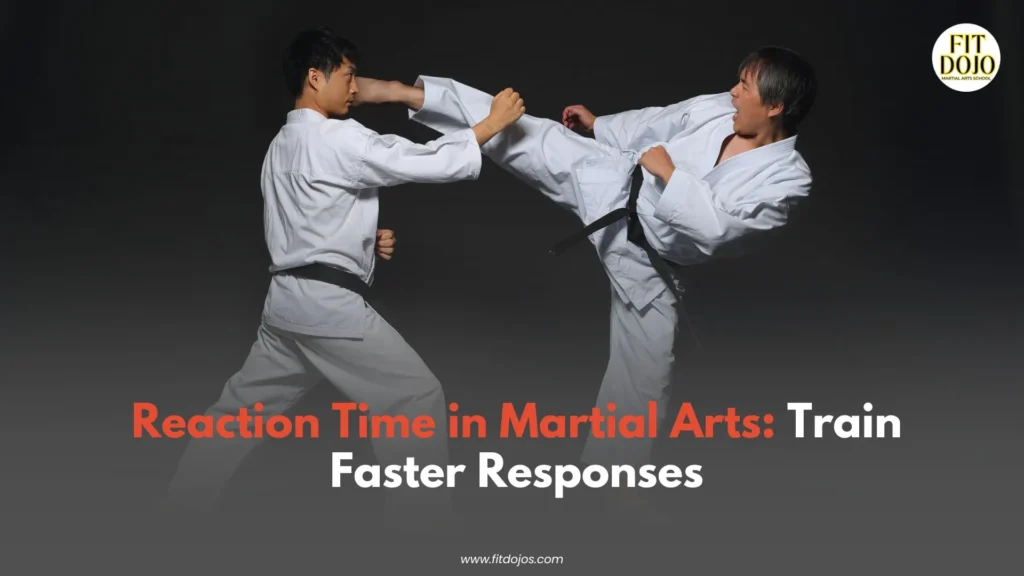
The student may hesitate at first. With safe, supervised practice, they gradually become more comfortable. They learn to breathe, focus, make a decision, and continue. Developing better reaction time in martial arts is one example of how repeated practice can improve both physical responses and confidence under pressure.
That lesson is valuable outside the dojo because life rarely waits until you feel completely ready. A student sitting an exam, an employee speaking in a meeting, or a child dealing with a difficult social situation can use the same principle: stay composed, focus on what you can control, and take the next action.
Courage is not feeling no fear. It is learning that fear does not have to make your decisions.
Discipline Turns Practice Into Self-Trust
People often associate martial arts with discipline, but discipline is not simply following instructions from an instructor. The deeper lesson is learning to follow through.
You attend class when staying home would be easier. You practise techniques that still feel awkward. You repeat the basics even when more advanced movements look more exciting.
Over time, that consistency builds something important: trust in yourself. When you repeatedly keep commitments, you begin seeing yourself as someone who can stay with a difficult goal.
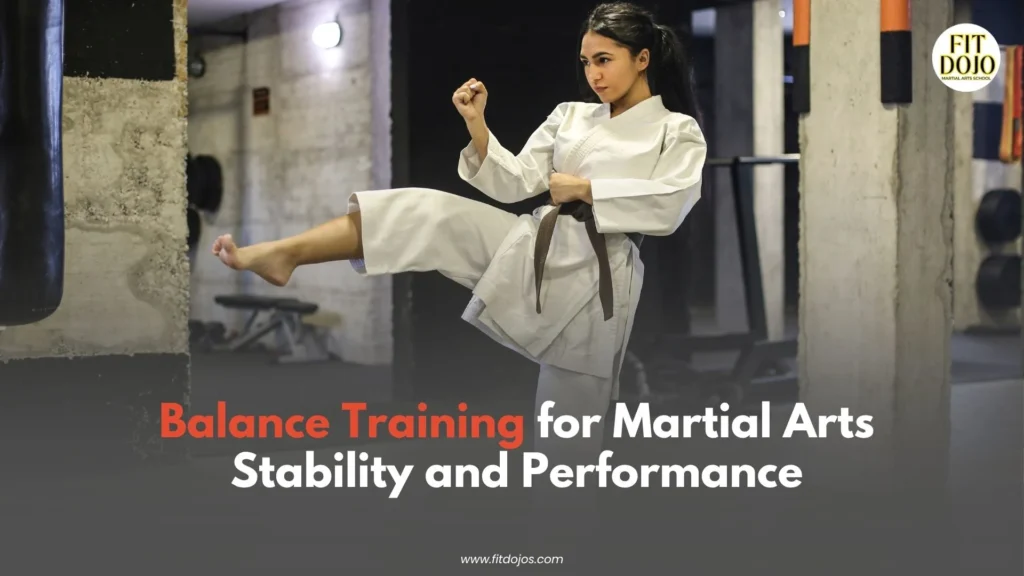
Even fundamental details matter. Learning correct karate positions and foundational stances teaches students that progress often comes from patiently improving the basics rather than rushing toward flashy techniques.
This is especially useful for teenagers and adults who sometimes mistake motivation for consistency. Motivation changes from day to day. Discipline helps you continue when motivation disappears.
Every promise you keep to yourself strengthens the confidence you have in yourself.
Failure Is Part of the Martial Arts Spirit
One of the most common myths related to confidence is the belief that it depends on winning. While sometimes winning is beneficial, learning how to fail might create something much more important.
Mistakes are common in martial arts. You forget how to do things. You become unbalanced. You are successfully countered by someone. You can have difficulties grading in school or have a training session where nothing appears to be working. The main thing is you show up again.
Students learn from that procedure that failing is information rather than identity. A child discovers that making mistakes is not proof of a lack of skill. A teenager finds that embarrassment fades as you learn. An adult recalls that it's okay to be a beginner and there is nothing to be ashamed of.
This is a factor that the mindset martial arts classes establish can be integrated into daily life. You start to be less afraid of circumstances when success is uncertain.
Losing confidence after one mistake is easy. Learning from the mistake is where stronger confidence begins.
Staying Calm When Pressure Rises
Confidence can be noticeable in the manner in which someone performs under pressure. A confident individual doesn't always act toughest or talk the loudest. Being calm enough to think effectively is often a sign of confidence.
Martial arts training develops skills as nervousness generally makes a technique worse. Students learn to control their breathing, stay conscious, and stop reacting blindly.
Confidence Without Aggression
"Does martial arts make individuals more aggressive?" is a subject that parents and beginners frequently ask.
Good martial arts classes teach control, respect, awareness, and ethical use of physical skills. Being able to protect oneself does not mean they are looking for someone to fight. Developing capability can actually reduce the need to prove yourself.
Practical self-defense consists awareness, boundaries, prevention, calming down, and understanding when stepping away is the most effective choice. Although no martial art can ensure one's own safety, training can make one feel more thoughtful and ready in unpredictable circumstances.
The strongest response is often the one you are calm enough to choose.
How a Martial Arts Mindset Builds Confidence Beyond the Dojo
The real value of a martial arts mindset becomes clearer when the habits developed during training start appearing elsewhere.
For Kids
A child who learns to stand properly, make eye contact, listen carefully, and speak clearly in class may begin carrying themselves differently at school. They may become more willing to answer a teacher's question, join a new activity, meet other children, or calmly tell someone to stop unwanted behaviour.
Families looking for age-appropriate training can explore kids karate classes. The goal is not to turn every child into the loudest person in the room. Quiet children can be confident too.
For Teenagers
Teenagers face a different type of pressure. Friendship groups, exams, social media, body image, independence, and uncertainty about the future can all affect confidence.
Martial arts gives teenagers a place where improvement is based on effort, practice, and measurable skills rather than popularity. A structured teen karate program can give young people a constructive environment to practise responsibility, resilience, and self-control.
A teenager who learns to recover after a difficult training session may also become better at recovering from a poor exam result or social setback.
For Adults
Adults are not immune to self-doubt. Starting martial arts as an adult can actually be uncomfortable because you are voluntarily placing yourself in a situation where you do not know everything.
That becomes part of the benefit. Learning to be a beginner again can make you more comfortable asking questions, taking feedback, attempting unfamiliar tasks, setting boundaries, and handling pressure at work or home.
If you want structured training designed for grown-ups, explore our adult martial arts classes.
The best martial arts lessons follow you through the dojo door.
How to Develop a Martial Arts Mindset in Everyday Life
You do not need to wait until you earn a particular belt before applying these lessons outside training. Start with simple habits that mirror what effective martial artists practise.
- Choose one small challenge. Set a goal you can work toward consistently, whether that means attending class twice a week, improving one technique, or speaking up once during a meeting.
- Get comfortable being a beginner. Allow yourself to be inexperienced without treating that as failure. Nobody starts with perfect technique.
- Measure progress against your previous self. Someone else's speed, flexibility, belt level, career, grades, or fitness does not define your progress.
- Treat mistakes as feedback. Ask what went wrong, adjust, and try again instead of deciding that one poor result proves you cannot succeed.
- Practise calmness before you need it. Slow your breathing and focus your attention during manageable challenges so those habits are easier to access under real pressure.
- Choose consistency over intensity. One highly motivated week rarely changes much. Regular practice over months does.
- Notice your victories. Confidence grows faster when you recognise progress instead of immediately moving the goalposts every time you improve.
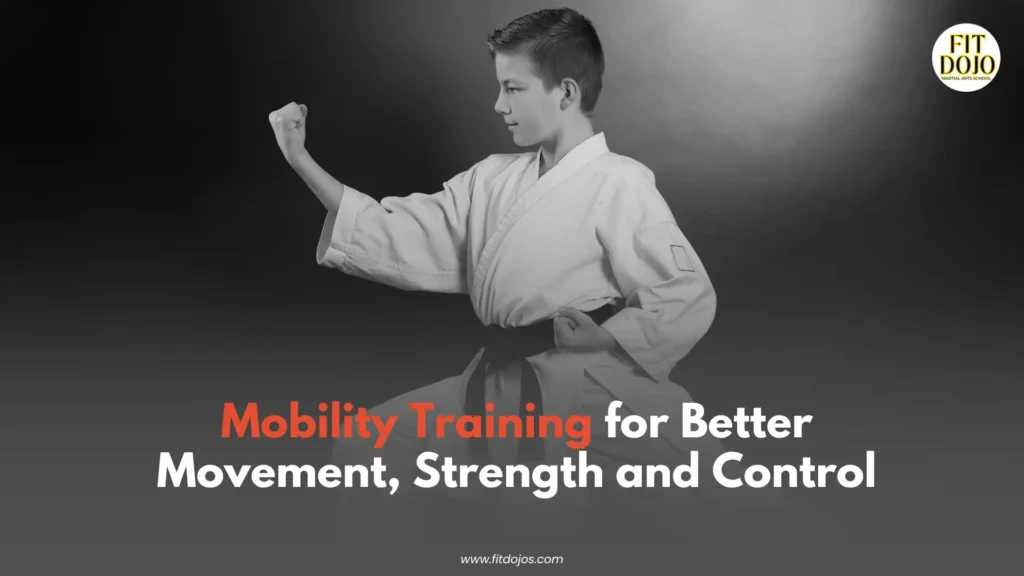
Physical freedom also affects how comfortably you train. Adding appropriate mobility training can help support movement quality, range of motion, and confidence when learning unfamiliar techniques.
Train the response you want before life gives you the test.
How Long Does Martial Arts Take to Build Confidence?
There is no universal timeline. Some beginners notice a change after only a few classes because walking into the dojo was already a major personal challenge. Others develop confidence gradually over months as their fitness, technique, social comfort, and ability to handle pressure improve.
Look for milestones rather than a deadline:
- Completing your first full class.
- Remembering a technique without assistance.
- Introducing yourself to a new training partner.
- Staying calm during a challenging drill.
- Completing a grading or reaching a training goal.
- Returning after a difficult or frustrating session.
Confidence is rarely one big transformation. It usually develops through dozens of smaller experiences that gradually change what you believe you can handle.
Confidence is built class by class, not overnight.
What If You Do Not Feel Confident Enough to Start?
This is one of the most important questions beginners ask. The simple answer is that you do not need confidence before starting martial arts.
You do not need to be fit enough, flexible enough, coordinated enough, tough enough, or experienced enough either. Those are qualities that training can help you develop over time.
Choosing the Right Martial Arts School Matters
The style you choose matters less than many beginners think. Karate, kickboxing, and other martial arts can all develop valuable physical and mental skills when the training environment is appropriate.
Look for a school with:
- Qualified and supportive instructors.
- Clear progression for beginners.
- Respectful training partners.
- Safe, supervised practice.
- Constructive feedback instead of humiliation.
- A culture that values improvement rather than ego.
Parents should look for instructors who know how to challenge children without intimidating them. Adults should feel comfortable asking how beginner classes work before committing.
You can learn more about FitDojos, our approach, and the community behind our martial arts programs before choosing the right starting point for yourself or your family.
You do not become confident enough to start. Sometimes starting is how confidence begins.
Build Confidence That Goes Further Than Training
A martial arts mindset is not related to walking through life assuming that you cannot be challenged. It's somewhat opposite.
You discover that there will be difficulties, errors, and uncomfortable circumstances. Knowing that you can react, grow, adapt, and keep going gives you confidence.
For kids, that may involve standing taller in class. For teenagers, it might mean managing stress without feeling completely lost. For adults, it could mean having the self-confidence to face obstacles they previously ran away from.
The dojo gives you a place to practice the lesson. Everyday life gives you opportunities to use it.
Ready to Put the Martial Arts Mindset Into Practice?
Reading about confidence is useful, but confidence becomes real when you start doing something that challenges you. Whether you are looking for a positive activity for your child, a structured program for your teenager, or a new challenge for yourself, the first class can be the beginning of that process.
Book your free trial at FitDojos and experience how martial arts can build skills, discipline, resilience, and confidence that extends far beyond the dojo.
Train your body in the dojo. Carry the mindset everywhere.
Similar post

September 6, 2026
Strength vs Speed: What Matters More in Martial Arts?