Mental Toughness Is What Keeps You Going When Skills Fail

FIT DOJOS
Expert Team,
FITDOJOS.COM
A child with mental toughness is able to continue even after a skill is unsuccessful, disappointment builds, or improvement seems to be taking longer than anticipated. Students who practice martial arts have numerous chances to confront those situations, start over, and attempt again.
Let's take an example, a child have been practicing same karate technique has been repeatedly. Throughout the practice, everything appears to be in order since they are familiar with where their feet and hands.
Then the trainer shows up and give pressure, the activity becomes quicker, and unexpectedly everything breaks apart completely. They don't understand the process.
The important section is about to begin. Do they change their mind and start again, or do they get frustrated and give up?
At that point, mental toughness becomes more crucial than mastering every skill.
For families considering karate for kids, this is one of the most valuable parts of training. Martial arts is obviously about learning physical skills, but some of the biggest lessons happen when those skills do not work perfectly.
What Mental Toughness Really Means
Mental toughness is sometimes misunderstood. It does not mean never feeling nervous. It does not mean ignoring pain, pretending everything is fine, or becoming aggressive. Even a mentally tough student may experience feelings of exhaustion, embarrassment, frustration, or uncertainty. What follows makes a difference.
They develop the ability to control their emotions, pay attention to feedback, change, and give it another go. Mental resilience, or being able to adjust and bounce back when things go tough, is directly linked to that skill.
For a young child, it include keeping interest after having trouble with a new skills like kick or punch. For a teenager, it can be figuring out a challenging combination. For an adult, it could be entering their first training session even though they feel totally nervous.
A mentally tough student can still feel frustrated, embarrassed, tired, or uncertain. The difference is what happens next.
They learn to manage the emotion, listen to feedback, make an adjustment, and try again. That ability is closely related to mental resilience, which is the capacity to adapt and recover when something becomes difficult.
For a child, that might mean staying engaged after struggling with a new kick. For a teenager, it could mean working through a difficult combination. For an adult, it might mean walking into their first class despite feeling completely out of place.
Families with older children can also explore teen karate training, where students can continue developing confidence, discipline, fitness, and resilience in an age-appropriate environment.
Can Mental Toughness Be Learned?
Absolutely, mental toughness could be built up by repeated experiences involving persistence, reflection, and adaptation.
Martial arts could offer such experiences in an organized setting. Instead of seeking immediate success, students are advised to learn, make mistakes, and listen to feedback
🧠 Mental toughness is not pretending things are easy. It is learning what to do when they are hard.
Why Skill Alone Is Not Enough
You can ask any skilled martial artist if all of their techniques always works perfect. Most likely, you can predict the answer.
A beginner practicing karate might forget a different combination during the session. Kick might be unbalanced and student may find it difficult to adopt a stance that they executed perfectly just few minutes ago.
This is not an indication that the kick was a failure. It indicates that they are learning slowly.
Understanding fundamental karate positions and stances can help beginners appreciate why coordination, balance, and repetition take time to develop.
A Realistic Dojo Example
Imagine a child called Alex. During practice, Alex performs a combination well. Later, the instructor changes the drill and asks students to react more quickly.
Alex freezes.
The first instinct might be, "I'm bad at this."
A good instructor helps replace that thought with something more useful: reset, listen, adjust, and try again.
The technique may take dozens of attempts to improve. But every attempt gives Alex another opportunity to practice responding constructively to difficulty.
👊 Missing once is an event. Giving up because you missed is a decision.
Mental Toughness Training Happens in Small Moments
You do not need a dramatic tournament or black-belt test to develop resilience.
Most mental toughness training happens during ordinary classes, where students repeatedly encounter manageable challenges.
- 🥋 They repeat a technique after getting it wrong.
- 💪 They stay focused when a drill becomes challenging.
- 🎯 They receive correction without treating it as criticism.
- 🧠 They concentrate even when distractions are around them.
- 📈 They accept that progress takes time.
- 🙌 They encourage another student instead of constantly comparing themselves.
These moments may seem small to an adult watching from the side. For a child, they can become repeated practice in handling frustration.
This is one reason the belt system can be useful. Progress usually requires practice, correction, consistency, and patience rather than natural talent alone.
Parents who want to understand this side of martial arts more deeply can read about how karate develops discipline through structure, repetition, and personal responsibility.
🎯 Confidence grows differently when a child knows, "I worked for this."
Why Mental Resilience Matters Beyond the Dojo
Parents are rarely looking for another activity simply because their child needs somewhere to spend an afternoon.
They often want something more.
Maybe their child needs confidence. Perhaps they struggle to stay focused when something does not come easily. Maybe the family wants more physical activity and less screen time.
That is where mental resilience developed through regular practice can become valuable.
A child who practices responding calmly to a difficult drill is not guaranteed to become fearless everywhere else. Life does not work that neatly.
But they are practicing a useful pattern:
Challenge → Response → Adjustment → Another Attempt
That pattern can matter at school when a subject becomes difficult, when they are learning a new skill, or when they need the courage to speak up appropriately.
It also matters in self-defense. Good self-defense skills are not simply about knowing how to punch or kick. Awareness, judgment, communication, confidence, and knowing when to leave a situation are important too.
Families interested in this practical side of martial arts can explore different karate styles for self-defence.
🛡️ Real confidence does not need to prove itself in every situation.
What Parents Can Do to Build Mental Toughness
Parents have an important role in how children interpret difficult moments.
Suppose your child leaves karate and says:
"I couldn't do that kick. Everyone else was better."
Immediately replying, "No, you were amazing!" feels supportive, but it can accidentally skip over the lesson hiding inside the frustration.
Try asking:
- 💬 "What part was difficult?"
- 🎯 "What did your instructor tell you to work on?"
- 🥋 "What are you going to try next class?"
Now the conversation has shifted from "I failed" to "I have something to work on."
Simple Ways Parents Can Reinforce Mental Resilience
- ⭐ Praise effort, attention, and improvement, not just winning.
- 🧩 Let children struggle safely with age-appropriate challenges.
- 💬 Ask what they learned rather than whether they were the best.
- 🏆 Celebrate progress that required persistence.
- 📅 Make consistency part of the family routine.
For families who want to participate together rather than simply watch from the sidelines, martial arts for parents and kids can turn movement, discipline, and shared progress into part of family life.
🌱 Don't only celebrate the result. Celebrate the response to difficulty.
A Real-Life Mental Toughness Example: From "I Can't" to "Let Me Try Again"
Consider a common beginner scenario.
A young student joins karate because their parents want them to become more active and confident. During the first few classes, the child enjoys punching pads but becomes frustrated whenever techniques require coordination.
The Problem
They cannot get a particular combination right.
After several attempts, they stop and say, "I can't do it."
The Solution
Instead of removing the challenge, the instructor simplifies it.
One movement. Then two. Then the complete combination.
The child still makes mistakes, but now improvement feels possible. A few weeks later, the technique is noticeably better.
The important change is not simply the combination. It is the language.
"I can't do it" starts becoming "Can I try again?"
That is mental toughness training in a form a child can actually understand.
This is a composite example rather than a claim about one specific student, but it reflects the kind of incremental learning that structured martial arts practice is designed to encourage.
Parents preparing a beginner can also learn what to expect before a child's first martial arts class.
🔥 Progress often begins when "I can't" becomes "I'll try again."
Mental Toughness Training Is Not Just for Kids
The ability to stay composed, accept correction, and keep working through difficulty matters at every age.
Adults often arrive at martial arts with their own barriers. Some feel unfit. Others worry that they are starting too late or will look inexperienced beside more advanced students.
That is exactly why starting can be valuable.
Structured martial arts classes for adults give people a chance to build fitness and practical skills while becoming more comfortable with challenge and gradual progress.
For people who prefer a faster-paced fitness option, kickboxing classes can provide another way to develop conditioning, coordination, focus, and persistence.
🥊 Mental resilience does not have an age limit.
Choosing the Right Martial Arts Studio Matters
Not every class or instructor is the same.
If you're searching for karate classes near me, a mixed martial arts dojo, self-defense classes, or a local martial arts studio, do not judge a program only by how impressive the techniques look.
Watch how the instructor teaches.
- 🥋 Do they correct children clearly without humiliating them?
- 🧠 Are beginners allowed to make mistakes?
- 💬 Is discipline balanced with encouragement?
- 🎯 Are expectations appropriate for the student's age and experience?
- 👨👩👧 Do parents understand what their child is working toward?
The training environment matters because mental toughness is not built by making children miserable. It develops when the challenge requires real effort but remains manageable enough for students to see that improvement is possible.
If your family is looking locally, you can explore karate in Rockdale and see how structured training can support fitness, confidence, discipline, and practical martial arts skills.
Families wanting more individual attention can also consider private martial arts classes where appropriate.
🥋 The right dojo does not remove every challenge. It teaches students how to meet one.
When Skills Fail, Mental Toughness Keeps You Moving
Every martial artist eventually makes a mistake. They miss their kicks. Their position look unnatural. The combination is no longer remembered.
Skills matter, and professional martial arts instruction should built them thoroughly.
However, a student's mental toughness influences what they do in the moments when things don't go as planned.
That could be perhaps one of the main causes for parents to think about teaching their kids martial arts. You're not just searching for anything to keep children busy. You are providing kids with opportunity to move, gain knowledge, struggle with confidence, grow, and realize that one failed efforts does not limit their potential.
You can learn more about FitDojos and our approach to martial arts training before deciding which program best suits your family.
🥊 Skills can fail for a moment. Mental toughness is what keeps you moving forward.
Ready to Build Confidence, Discipline, and Mental Resilience?
The most effective method to learn about martial arts is to practice it yourself, whether you are searching for self-defense, discipline, fitness, confidence, or just a better way of enjoying time together with your child.
It's not necessary for your child to be self-assured, well-coordinated, or naturally athletic. That's the purpose of training..
Ready to see how your child responds to a real class? Book a trial class at FitDojos and experience the training environment firsthand.
Similar post
September 28, 2026
How Martial Arts Develop Leadership Skills

September 10, 2026
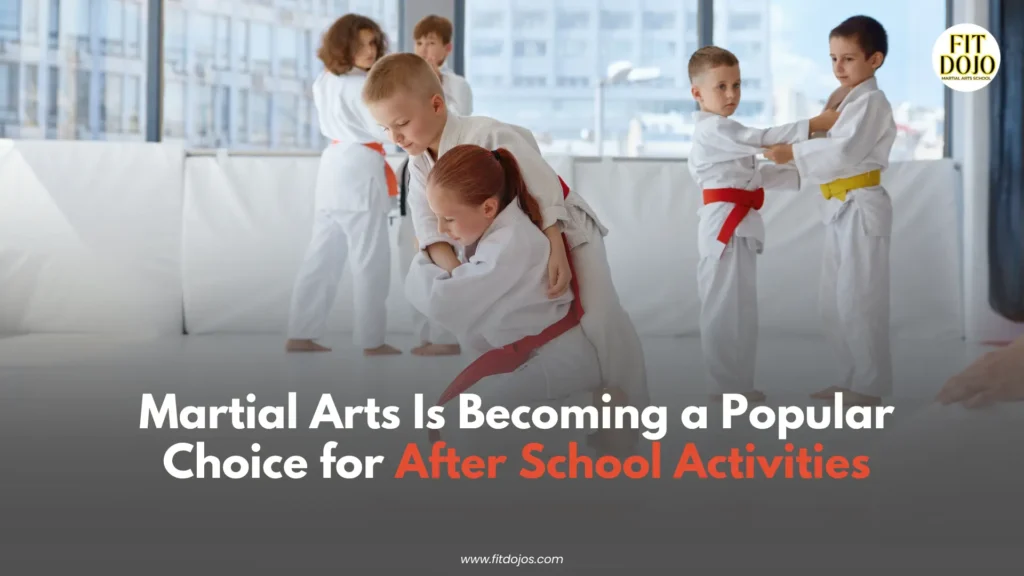
Why Sparring Fear Happens Even When You Know the Techniques