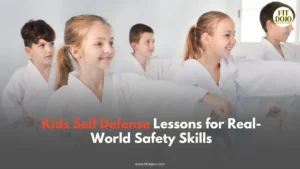
Kids Self Defense Lessons for Real-World Safety Skills
FIT DOJOS
Expert Team,
FITDOJOS.COM
Self defense for kids is not instructing kids to prepare themselves for a fight. It means providing them the confidence, consciousness, and practical skills to deal with uncomfortable or unsafe scenarios with calmness.
It might occur in a moment, a push on the playground, a bigger kid blocking their path, or a stranger who makes them feel uncomfortable. At these times, kids need more than a few memorized moves. They must have an understanding of how to make space between them, use their voice, to identify danger and get help if necessary.
This is where proper organized self-defense training really comes into its own.
At Fit Dojo, children learn practical safety skills as well as discipline, coordination, confidence and self-control. The objective is straightforward: to help kids make better decisions under pressure and defend themselves without creating unwanted aggressive behavior.
🥋 The goal is simple: raise kids who know how to stay calm, think clearly and protect themselves when it matters.
Kids Self Defense Is More Than Punching and Kicking
Discuss with a child what self-defense means and you may be given a passionate demonstrating of their favorite kick and punch.
That's acceptable. Kicks and punches are amazing.
However proper child self defense begins before anyone even throws a punch or kick.
To begin with, children must begin to learn to recognize when something is wrong. They need to learn about personal space, boundaries, communication and when stepping away is wiser than engaging.
At Fit Dojo we teach self-defense through awareness, boundaries and controlled reactions. The goal is not to make children skeptical about the world. “It is to make them more competent in it..
Parents looking for structured, age-appropriate martial arts training can learn more about our martial arts classes for parents and kids.
A child can learn to:
- 👀 Notice unusual or threatening behaviour.
- 🗣️ Say “Stop” or “Back away” clearly and confidently.
- 🚶 Create distance instead of allowing someone to crowd them.
- 🛡️ Protect themselves if physical contact becomes unavoidable.
- 🏃 Escape and find a trusted adult as quickly as possible.
These lessons matter in everyday situations, from playground bullying to interactions with strangers.
Key takeaway: The smartest self-defence move is often the one that prevents a fight from starting.
What Are the Best Self Defense Skills for Kids?
Parents often ask, “What are the best self defense skills for kids?”
There is no single magic technique. Children need a toolkit.
1. Situational Awareness
Children should learn to notice their surroundings instead of walking through every situation on autopilot.
Who is nearby? Where is the exit? Is someone following them? Is another child becoming increasingly aggressive?
Awareness gives kids something extremely valuable: time.
2. Strong Verbal Boundaries
A confident voice can be surprisingly powerful.
Practising phrases such as “Stop,” “Leave me alone,” and “I don’t like that” teaches children that they are allowed to establish boundaries.
3. Distance and Movement
Good self defense skills for kids include knowing how to move away, maintain balance and avoid becoming trapped.
Fundamental movement also connects naturally with strong martial arts positioning. Parents who want to understand the basics can read our guide to essential karate positions.
4. Simple Physical Responses
When physical self-defence becomes necessary, techniques should be simple enough to remember under pressure. Children can practise defensive positioning, blocking, controlled striking and age-appropriate releases from common grabs under qualified supervision.
5. Escaping and Getting Help
Self-defence is not about standing around to see who wins.
If a child creates an opportunity to escape, the priority should be getting somewhere safe and telling a trusted adult.
Key takeaway: Awareness first, voice second, escape whenever possible, physical defence when necessary.
A Real-Life Kids Self Defense Example: From Freezing to Responding
Take the example of seven years old kid named Lio.
During lunch, another student comes up, keeps pushing and grabbing his shirt. Lio is aware he doesn't like it but he freezes up. Afterwards, he says to his parents, “I wasn't sure what to do."
The issue here is not Lio’s lack of courage. He has no planned solution. Now picture Lio spending months training realistic, controlled scenarios in a martial arts studio.
When a situation like that occurs again, he is aware of the behavior. He moves backward, places his hands into a defensive position and shouts loudly, “Stop. Back away.”
Lio can defend himself long enough to create space and leave.
The purpose was never to instruct a Lio how to assault another kid.
The answer was to teach him a sequence to remember when his emotions were high.
This is one of the main benefits of structured training. Kids hear not only what to do. They practice doing it.
Key takeaway: Under pressure, children are more likely to use responses they have already practised.
At What Age Should Kids Learn Self Defense?
Another common question is, “At what age should kids learn self defense?”
Earlier than many parents think, provided the lessons match the child's developmental stage.
A four-year-old does not need the same training as a twelve-year-old.
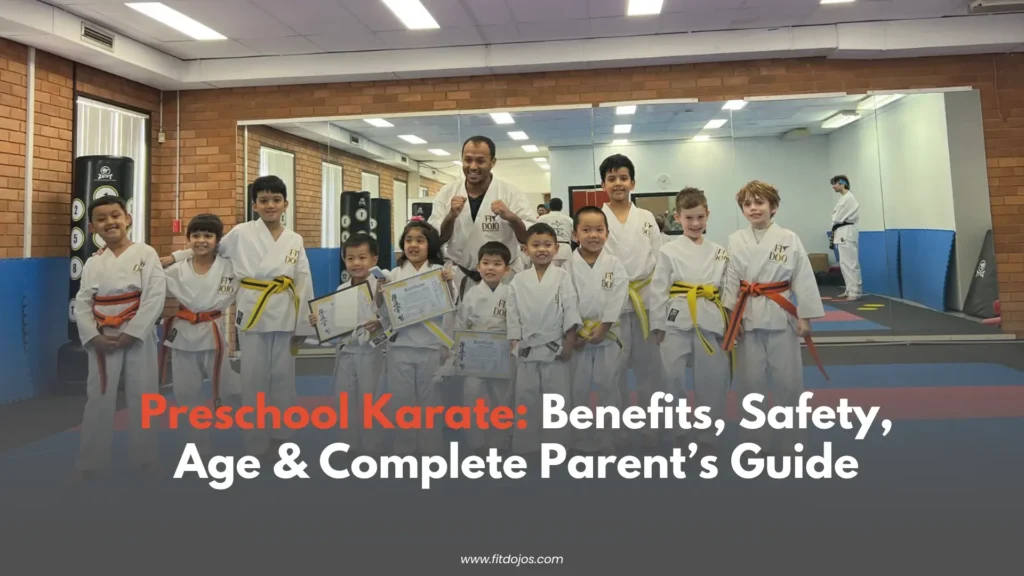
For younger children, self-defence can mean learning personal space, listening, balance, coordination and following safety instructions. Families with preschool-aged children can explore our Little Kids Karate program, which is designed for younger learners.
As children mature, training can progressively introduce more sophisticated movement, defensive techniques and decision-making.
Fit Dojo offers kids karate classes for ages 6 to 12, creating an age-specific pathway rather than expecting every child to learn in exactly the same way.
The question is therefore less about finding one “perfect age” and more about finding appropriate instruction.
Key takeaway: Start with age-appropriate safety habits, then let the physical skills grow with the child.
How Can I Teach My Child Basic Self Defense?
You can start training at home without making your living room into a small training ring.
Begin by practicing basic scenarios. Ask, “If someone you don’t know asks you to go out with them, what will you do?”
Practice in a loud clear voice. Discuss about safe areas where your child can go for assistance as needed.
Let them know if somebody causes them to feel uncomfortable, they can walk away. You may also try out common scenarios like bullying, unwanted grabbing or being lost in a public place.
What is more difficult to replicate at home is structured physical practice with multiple partners, movement and controlled resistance. This is where professional self-defense classes or karate for kids can be helpful.
Online learning can support knowledge, but it cannot fully reproduce supervised partner practice. Our guide on whether you can really learn karate online explains where digital instruction helps and where in-person coaching matters.
A good instructor can correct technique while teaching children when a physical response is appropriate and, just as importantly, when it isn't.
Key takeaway: Parents can build safety habits at home, while professional training turns those ideas into practised skills.
Are Self Defense Classes Safe for Kids?
Parents understandably ask, “Are self defense classes safe for kids?”
Any physical sport carries some injury risk, so the quality and structure of instruction matter.
A 2023 study examining US emergency-department data found that martial-arts injury rates among children decreased from 2.07 per 10,000 children in 2013 to 1.44 per 10,000 in 2021. The researchers also found competition carried greater head, neck and traumatic brain injury risk than formal classes and other activity types, highlighting why sensible risk-management practices matter.
Good children's classes should therefore prioritise controlled technique, appropriate progression, supervision and clear rules rather than encouraging kids to hit one another recklessly.
Parents preparing for their child's first lesson may also find our guide on what parents should know before a first martial arts class helpful.
Parents searching for a mixed martial arts dojo, karate school or self-defence program should watch a class before committing. Look at how instructors manage contact, correct students and respond when a child feels uncomfortable.
Key takeaway: Safe martial arts training is structured, supervised and built around control rather than aggression.
Why Martial Arts Works for Real-World Child Self Defense
Knowing something intellectually and performing it under pressure are very different things.
A child might know they should speak confidently, yet their voice disappears when somebody intimidates them.
Martial arts creates opportunities to practise.
Again. And again. And again.
Through repetition, children can develop:
- 🥋 Better balance and coordination
- 🧠 Greater focus and decision-making
- 💪 Physical confidence
- 🗣️ Stronger communication and boundaries
- 🤝 Respect for training partners
- 🔥 Resilience when something feels difficult
Discipline is a major part of this process. Our article on how karate builds discipline explores why consistency and self-control matter far beyond the dojo.
Children who eventually want a different striking-based discipline can also progress into kickboxing classes, where technique, fitness and control continue to play an important role.
As children move into adolescence, age-appropriate training can continue through our teen karate program.
That is why parents searching online for “karate classes near me” are often looking for much more than a sport.
They want their child to stand taller. Speak more confidently. Handle challenges without immediately falling apart. And, yes, know what to do if somebody physically threatens them.
Key takeaway: Martial arts trains the body, but the confidence to use good judgement may be the bigger win.
Choosing the Right Kids Self Defense Classes in Sydney
Not every program teaches children in the same way.
When comparing karate Sydney programs or local self-defence classes, parents should look beyond belts and flashy demonstrations.
Ask:
- 🥋 Are instructors experienced and qualified?
- 👧 Are lessons adapted for different age groups?
- 🛡️ Is safety clearly prioritised?
- 🧠 Does training include awareness and decision-making?
- 🤝 Does the dojo teach respect and self-control?
- 😊 Do children look engaged rather than intimidated?
It can also help to understand the different martial arts approaches used for practical protection. Our guide to karate styles for self-defence gives parents additional context.
Fit Dojo is a community-focused martial arts school with locations in Rockdale, Peakhurst and Hurstville. You can learn more about our instructors, philosophy and training approach on the Fit Dojo About Us page.
Head Master Anuj Karki brings more than 20 years of martial arts experience, including a 4th Dan Black Belt in Taekwondo and a 3rd Dan Black Belt in Karate.
The programs combine martial arts fundamentals with confidence, discipline, fitness and practical self-defence, giving families a structured pathway from early-childhood karate through kids, teens and adult training.
For parents who want more individual attention or targeted skill development, Fit Dojo also offers private martial arts classes.
Key takeaway: Choose a dojo that teaches your child when to use their skills, not simply how to use them.
Kids Self Defense Skills They Can Carry Everywhere
Remember that, you can't be by your child's side all the time. This is arguably the difficult aspect of being a parent. However, you can support in getting them ready for the times when you won't be there.
Children who are provided with excellent self-defense instruction learn more than just punches, kicks, and blocks. It helps them to recognize problems, set limits, maintain composure, defend themselves when needed, and ask for help if needed.
From the dojo to the playground, school, public transportation, and even in their adulthood, those self-defense skills can accompany them.
And martial arts does not have to stop when childhood does. Parents and other family members who want to train themselves can explore our adult martial arts classes.
If you are looking for karate for kids or practical self-defence training in Sydney, Fit Dojo offers programs in Rockdale, Peakhurst and Hurstville.
Ready to see how your child responds to martial arts training?
Book a free trial class at Fit Dojo and experience the training environment firsthand.
Because the best outcome of self-defence training is not raising a child who is eager to fight.
It is raising one who has the confidence and judgement to avoid the fight whenever possible, and the skills to protect themselves when they cannot.
🥋 Calm mind. Strong boundaries. Practical skills. That is real self-defence.
Similar post
September 28, 2026
How Martial Arts Develop Leadership Skills
September 10, 2026
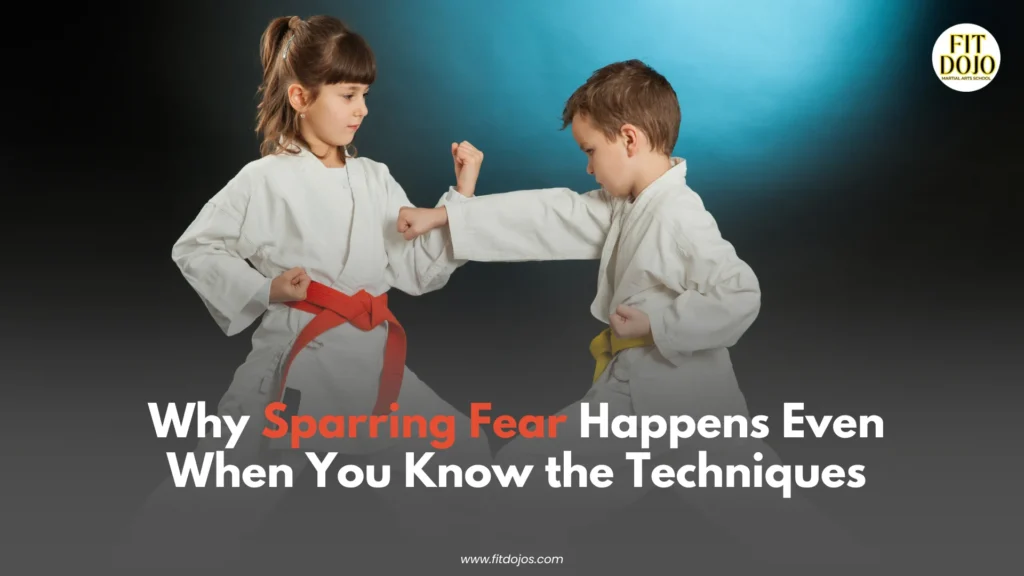
Why Sparring Fear Happens Even When You Know the Techniques