Karate History From Traditional Self-Defence to Modern Sport and Competition
FIT DOJOS
Expert Team,
FITDOJOS.COM
History of karate begins in Okinawa, where local combat techniques evolved over time through cultural exchange. From there, karate evolved into organized styles, gained worldwide prominence, and eventually became part of sporting events.
In Okinawa, martial techniques evolved within a specific culture that had been formed for many centuries due to interaction with the neighboring territories. From there, karate entered to mainland Japan, was developed into organized styles, gained worldwide popularity, and finally, reached sporting venues.
Learning about karate history is not only a fun fact for martial arts enthusiasts but also an answer to the question why karate classes combine physical technique.
🥋 The short version: Karate changed dramatically as it travelled around the world, but its emphasis on disciplined practice and controlled technique remains recognisable today.
Where Did Karate History Begin?
The history of karate begins in Okinawa, formerly the centre of the Ryukyu Kingdom.
Okinawa was not culturally isolated. The Ryukyu Kingdom traded and interacted with neighbouring regions, creating an environment where ideas, customs, and martial practices could influence one another.
Okinawa and the Ryukyu Kingdom
There is a temptation to tell karate history like a superhero origin story.
One secret master invents it. One dramatic event changes everything. Suddenly, karate exists.
The real story is more gradual and more interesting.
Okinawan fighting traditions developed over generations and were refined, taught, adapted, and passed between practitioners.
That is why responsible history about karate should avoid pretending there was one simple starting date or one person who invented the entire martial art.
🥋 Key idea: Karate developed through generations of practice rather than appearing as one finished system.
Karate was shaped over generations, not invented overnight.
How Karate History Moved From Self-Defence to Structured Training
Karate in its earlier days was not exactly what one would see in a karate dojo that people visit now. There was no booking online, no training equipment with brand logos, no modern competition mats, and definitely no parents booking classes through their mobiles.
Karate developed as an effective form of self-defense which combined the skills of local fighting style. At that time, people focuses on protecting themselves such as striking, blocking, moving, and close combat without adhering to a set form of sport. Later, karate was introduced to mainland Japan. Japanese schools of martial arts slowly established forms of karate, including kihon (fundamental techniques), kata (forms), and kumite (sparring). Along with ranks, dojo regulations, and methods of training, competition became increasingly popular with the spread of karate around the world.
Good training asks students to consider posture, balance, timing, breathing, control, direction, and the purpose behind techniques.
If you want to understand how those foundations work physically, our guide to basic karate positions explains how stance, balance, power, and control connect to technique.
The techniques survived because people trained, practised, and passed them on.
How Karate Spread From Okinawa to Japan
One of the major turning points in the history of karate was its movement beyond Okinawa.
During the early twentieth century, karate became increasingly established in mainland Japan. Gichin Funakoshi became one of the most influential figures associated with introducing and promoting Okinawan karate there.
As karate reached new audiences, teaching became increasingly organised.
Different systems developed their own technical priorities, kata, teaching methods, and philosophies.
Today, major karate styles include:
- 🥋 Shotokan
- 🥋 Goju-Ryu
- 🥋 Shito-Ryu
- 🥋 Wado-Ryu
These are not simply different brand names for exactly the same thing. Stances, movement, kata, training emphasis, and interpretations can differ.
Beginners interested in the practical differences between systems can also read our guide to karate styles for self-defence.
Once karate left Okinawa, its audience became much bigger.
How Karate Became a Modern Competitive Sport
Here is where the story gets interesting.
A martial art with traditional Okinawan roots eventually became an international competitive sport.
Modern karate competition generally features two main formats: kata and kumite.
Kata Competition
In competitive kata, athletes perform predetermined sequences and are judged on qualities such as technique, speed, strength, rhythm, balance, and control.
It takes the solo practice found in traditional training and places it into a competitive environment.
Kumite Competition
Kumite involves competitors facing one another under a defined ruleset.
Timing, distance, technique, speed, tactical decision-making, and control become essential.
Modern sport karate should not be confused with an unrestricted fight. Competition has rules, scoring systems, prohibited behaviour, officials, and safety requirements.
Karate Reached the Olympic Games
One of the clearest signs of karate's transformation into a global sport came when it made its Olympic debut at the Tokyo 2020 Games, which were held in 2021.
The Olympic programme included both kata and kumite competition.
Think about that journey.
An Okinawan martial tradition eventually reached an international sporting event watched around the world.
The arena changed, but control remained central.
Traditional Karate vs Modern Sport Karate
So, has competition replaced traditional karate?
No.
Modern karate can serve several purposes at the same time.
Some students love competition. Others have absolutely no interest in medals.
One adult may join because sitting behind a desk all week has done their fitness no favours. Another may want self-defense skills and greater confidence. A parent may want karate for kids because their child needs structure, physical activity, and a positive challenge.
Adults who want a practical introduction can explore our adult martial arts classes, while students who prefer striking-focused conditioning can consider kickboxing classes.
None of them necessarily needs to become a competitor.
You do not need to live in the past to learn from it.
What Karate History Means for Today's Students
This is where history becomes practical.
Imagine a beginner named Sam walking into a martial arts studio.
Sam feels awkward, has never thrown a proper punch, and worries that everyone else will be better.
Problem: confidence is low and the movements feel unfamiliar.
Solution: training is broken into manageable pieces. Learn the stance. Practise the movement. Get corrected. Repeat. Improve.
A few months later, Sam's biggest achievement may not be a dramatic spinning kick.
It may simply be walking into class without feeling nervous.
That pattern reflects something deeply connected to karate's development: progress through consistent practice.
Modern karate can offer opportunities to develop:
- 🥋 Confidence through learning achievable skills
- 🎯 Discipline through repetition and structured training
- 💪 Fitness through regular movement and conditioning
- 🧠 Focus by requiring attention to technique
- 🛡️ Self-defence awareness through appropriate martial training
- 🤝 Community through practising alongside other students
Students interested in the mindset side of training can read more about how karate builds discipline through consistency, structure, and progressive goals.
Karate's history matters because its habits are still practised today.
KWhy Parents Still Choose Karate for Kids
Parents want results they can see in everyday life.
Perhaps their child lacks confidence. Maybe they need more physical activity, better coordination, or something productive to work toward.
That is where traditional martial arts structure can still feel surprisingly modern.Students enter the training space, listen to instructions, practise with others, receive corrections, and gradually work toward more difficult skills.
Families can explore parent and kids martial arts programs if they want to train together, while school-age beginners can start with kids karate classes.
Younger children may benefit from little kids karate focused on age-appropriate movement and listening skills, while older students can continue developing confidence and control through teen karate training.
There are no instant black belts.
And that is rather the point.
The belt matters less than the behaviour and ability developed while working toward it.
For kids, karate's strongest tradition may be learning how to grow.
What Beginners Should Know Before Starting Karate
Knowing a little karate history is useful, but your first class is still about practical basics.
You will probably spend more time learning how to stand, move, listen, and follow instructions than discussing centuries of martial arts development.
Beginners may also need guidance on what to wear. Our guide to martial arts uniforms explains common training clothing and what students may need as they progress.
And while online resources can be useful for revision, beginners should understand the limits of self-teaching. Our guide on learning karate online explains where videos help and where instructor feedback matters.
History gives you context, but good coaching gives you progress.
Choosing a Modern Karate or Mixed Martial Arts Dojo
Searching for a mixed martial arts dojo, karate school, or self-defense classes can produce plenty of options.
Do not choose based purely on the fanciest website or toughest-looking photos.
Look for:
- 👨🏫 Instructors who communicate clearly and respectfully.
- 🥋 Structured beginner training rather than throwing newcomers into advanced drills.
- 🛡️ Clear safety expectations and controlled practice.
- 👧 Age-appropriate instruction for children.
- 🎯 A progression system students can understand.
- 🤝 A welcoming culture where beginners feel comfortable learning.
If you want to learn more about the people and philosophy behind the school, visit the Fit Dojos About Us page.
The right dojo respects tradition while teaching the student standing in front of them.
Karate History Meets Modern Training in Rockdale
If you are searching for karate in Rockdale, the best next step is not another hour of reading search results.
Visit a dojo and see how traditional karate principles are taught in a modern training environment.
You can explore karate training in Rockdale for structured instruction built around technique, progression, and confidence.
Students interested in a broader training approach can also consider martial arts in Rockdale.
If you prefer more individual feedback, private martial arts classes can provide one-on-one attention to technique and progression.
Watch how instructors treat beginners. Watch how students treat each other.
That is where a martial arts school's values become visible.
Tradition matters most when it improves the way people train today.
Conclusion: From Karate History to Your First Class
The fascinating thing about karate history is not simply that karate survived.
It adapted.
Karate travelled from Okinawa to mainland Japan, expanded internationally, developed multiple styles, became an organised competitive sport, and eventually reached the Olympic Games.
Yet step inside a good dojo today and some fundamentals remain familiar: practise carefully, respect others, improve your technique, control your actions, and keep showing up.
You do not need to memorise hundreds of years of history about karate before taking your first class.
You just need somewhere appropriate to begin.
Ready to experience karate rather than simply read about it? Book your trial class at Fit Dojos and experience structured martial arts training for yourself or your child.
Similar post
September 28, 2026
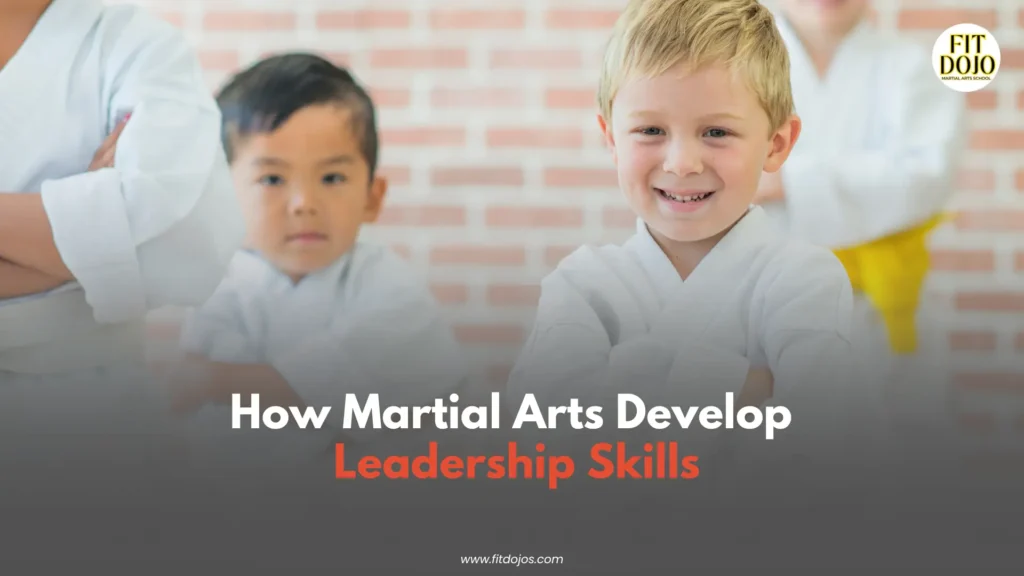
How Martial Arts Develop Leadership Skills

September 10, 2026
Why Sparring Fear Happens Even When You Know the Techniques