Balance Training for Martial Arts Stability and Performance

FIT DOJOS
Expert Team,
FITDOJOS.COM
The most crucial part of martial arts training is balance training. You need to place your foot down earlier than you had intended when you execute a kick. You find yourself a little unsteady. However, you may be able to execute a kick or punch flawlessly while standing still, but as you begin to move, everything gets more difficult.
This is precisely the point at which balance training becomes effective.
Martial artists with good balance can kick, strike, defend, change direction, and manage their bodies while under pressure. Proper balance as well as coordination from the start can make acquiring skills less difficult and movement smoother for beginners, including kids beginning mixed martial arts or karate.
What Is Balance Training in Martial Arts?
In simple terms, balance training means a method designed specifically to strengthen the ability of controlling the position of your body while remaining still or moving around.
It is natural to believe that having good balance just involves being able to stand on a single leg. But, it goes far beyond than that in martial arts.
If your are executing a roundhouse kick. Your hips turn, your supporting foot turns, your weight changes to a single leg, and your other leg drives in the direction of the objective. All these adjustments must be handled by your body without causing it to lose balance.
Your nervous system, muscles, joints, visual system, and sense of body position are required to work jointly to do it.
For this reason, coordination and balance are strongly related. While coordination enables various bodily parts to work effectively, balance support in maintaining control.
Takeaway: Good martial arts balance is not about standing still. It is about staying in control while your body moves.
Why Is Balance Important in Martial Arts?
Balance affects almost every movement you perform in martial arts.
Whether you are learning karate, taekwondo, kickboxing classes, or mixed martial arts, you constantly transfer your body weight. Every step, kick, stance change, defensive movement, and combination requires some degree of stability.
Good balance can help you:
- Maintain stronger stances.
- Control kicks more effectively.
- Move and change direction efficiently.
- Recover after attacking.
- Coordinate upper and lower body movements.
- Stay controlled when your weight shifts.
- Learn more advanced techniques with a stronger foundation.
For example, consider two beginners learning a front kick. The first student throws the leg forward as quickly as possible and immediately falls into the next step. The second raises the knee under control, extends the kick, retracts it, and returns to stance without unnecessary movement.
The difference is not simply flexibility or leg strength. Balance and body control play a major role.
For children, martial arts can also provide structured opportunities to develop coordination, posture, controlled movement, and physical awareness. Parents comparing programs can explore our martial arts options for parents and kids to understand how training can fit different ages and experience levels.
Takeaway: Better balance creates a stronger foundation for almost everything you do in martial arts.
How Does Balance Work?
Your body constantly makes small adjustments to keep you stable. Understanding a few basic principles makes balance training much easier to apply to martial arts.
Center of Gravity
Your center of gravity is the point around which your body weight is balanced.
When you stand naturally on two feet, controlling it is relatively easy. Lift one foot to kick and your situation changes immediately. Your body must reposition itself over the supporting leg.
Beginners often lose balance because their upper body moves too far away from that supporting base.
Base of Support
Your base of support is the area beneath you that provides stability.
Standing with two feet on the floor gives you a larger base than standing on one leg. This is one reason kicking requires more balance than simply holding a fighting stance.
Good martial arts technique teaches you to control your center of gravity even as your base of support changes.
Weight Distribution
Where you place your weight matters.
If too much weight is committed in one direction, changing direction quickly becomes difficult. If your weight is poorly positioned before a kick, you may need an extra movement just to regain balance.
Learning to shift weight deliberately is therefore an important part of martial arts training.
Core Stability
Your core connects your upper and lower body.
Strong, coordinated trunk muscles help control unwanted movement as you rotate, kick, step, or absorb force. This is why stability training should involve more than ankles and legs.
Takeaway: Balance improves when your center of gravity, base, weight distribution, and body control work together.
Three Types of Balance Martial Artists Need
Martial arts requires different forms of balance depending on what you are doing.
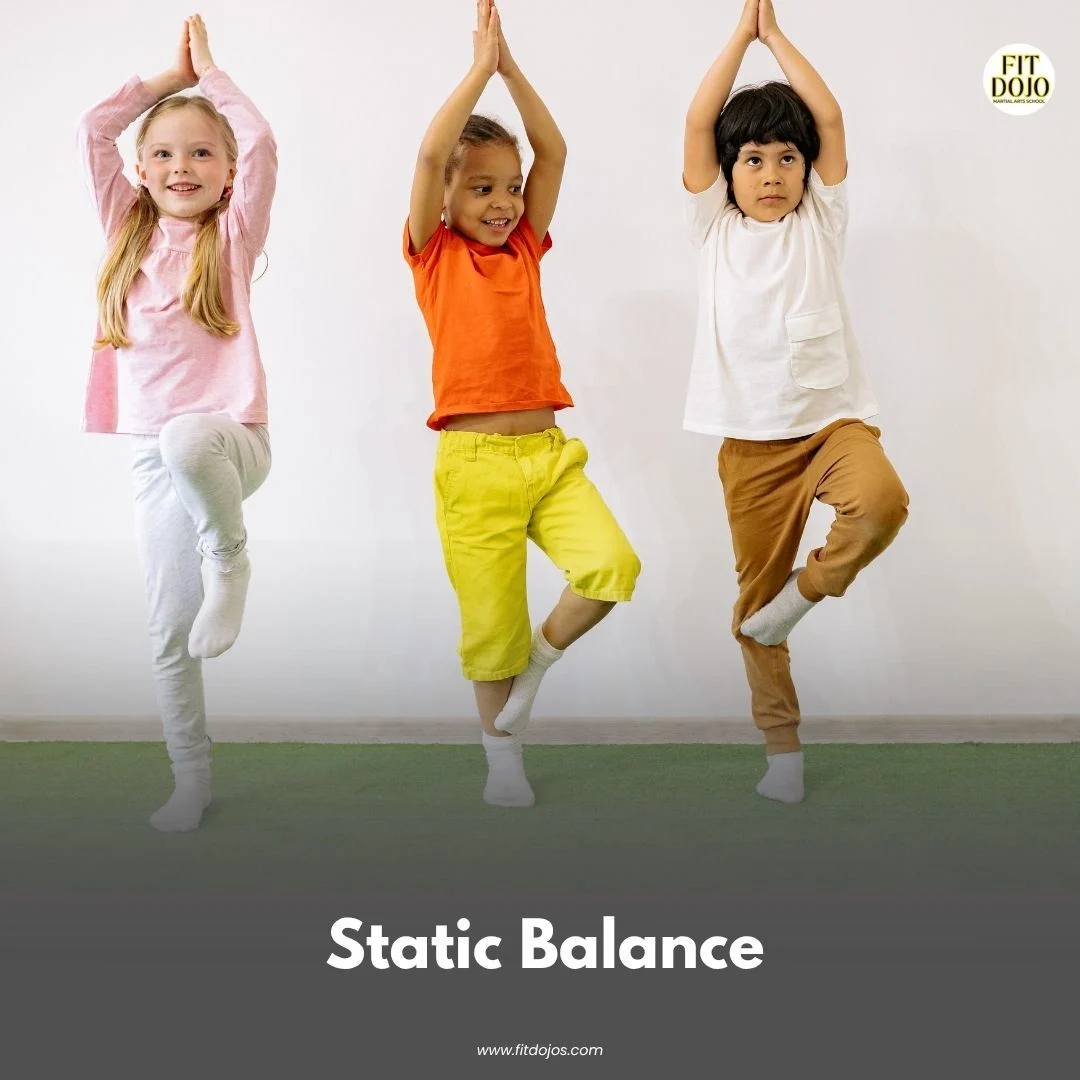
Static Balance
Static balance is your ability to maintain control in a relatively stationary position.
Standing on one leg is the obvious example. Holding a chambered kicking position is a more martial-arts-specific version.
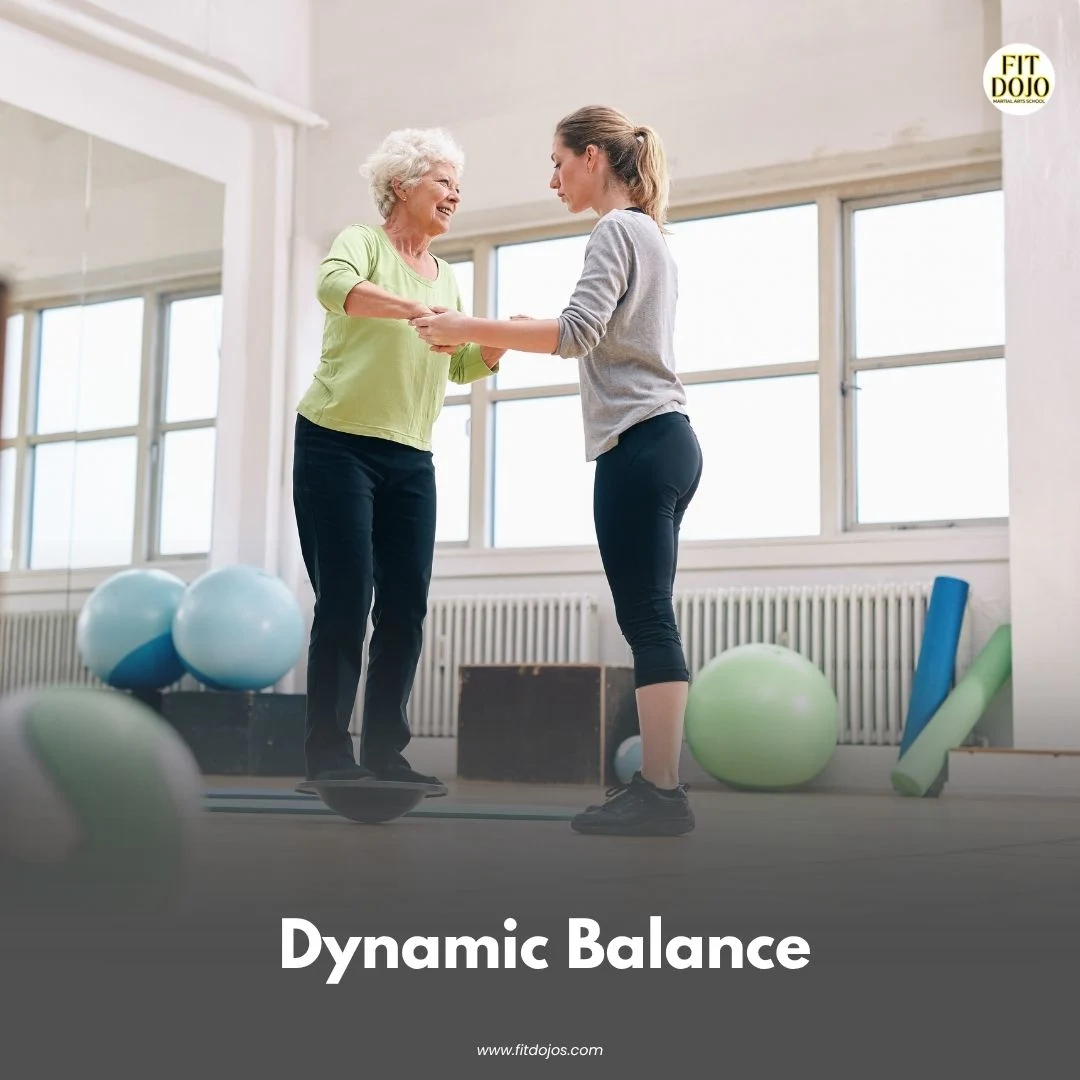
Dynamic Balance
Dynamic balance is maintaining stability while moving.
Stepping between stances, kicking, pivoting, changing direction, and moving through combinations all require dynamic balance.
This becomes especially important in faster training formats such as kickboxing workouts, where movement, striking, and recovery happen continuously.
Reactive Balance
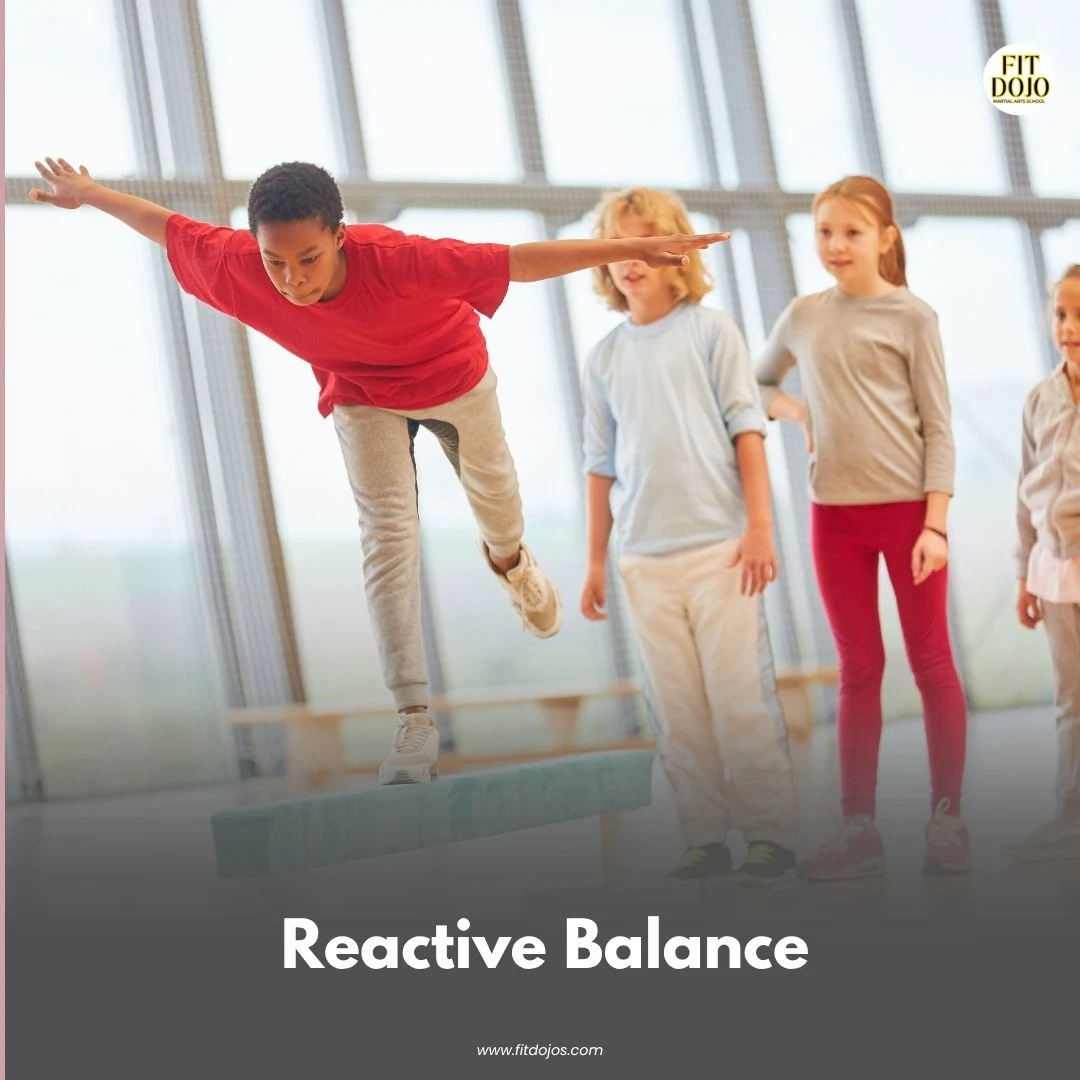
Reactive balance is your ability to regain or maintain control when something unexpected happens.
Perhaps you miss a kick. Your partner moves unexpectedly. You step at an unusual angle. Your body must quickly adjust.
This becomes increasingly important as training progresses from predictable drills to partner work and practical movement situations.
Takeaway: Martial artists need to control their balance before, during, and after movement.
Why Do You Lose Balance During Martial Arts?
If you frequently wobble during kicks or stumble after combinations, do not automatically assume you simply have bad balance.
There is usually a reason.
- Poor posture: Leaning too far forward, backward, or sideways moves your weight outside a controllable position.
- Weak supporting leg: Your standing leg has to stabilize your body while the other leg moves.
- Limited ankle mobility: Restricted movement at the ankle can make certain positions harder to control.
- Limited hip mobility: If your hip cannot move comfortably through the required range, other parts of your body may compensate.
- Weak trunk control: Excessive movement through the torso can destabilize a kick.
- Incorrect weight distribution: Poor weight placement makes transitions and recovery harder.
- Going too fast: Beginners sometimes add speed before they can perform the movement under control.
- Kicking too high: Trying to reach head height before developing enough mobility and control often causes technique to break down.
A common example is a beginner practicing a high roundhouse kick. They may lean excessively to gain extra height, which shifts their center of gravity and makes the supporting leg work much harder.
Lowering the target and performing the same kick slowly often reveals whether the problem is balance, mobility, strength, or technique.
If you are completely new to striking, our guide to kickboxing for beginners explains how new students can start with more manageable fundamentals.
Takeaway: Find out why you are losing balance before trying to fix it.
Balance Training: Best Exercises for Martial Artists
So, what are the best balance exercises for beginners?
You do not need complicated equipment. Start with simple movements that you can perform correctly and progressively make them more challenging.
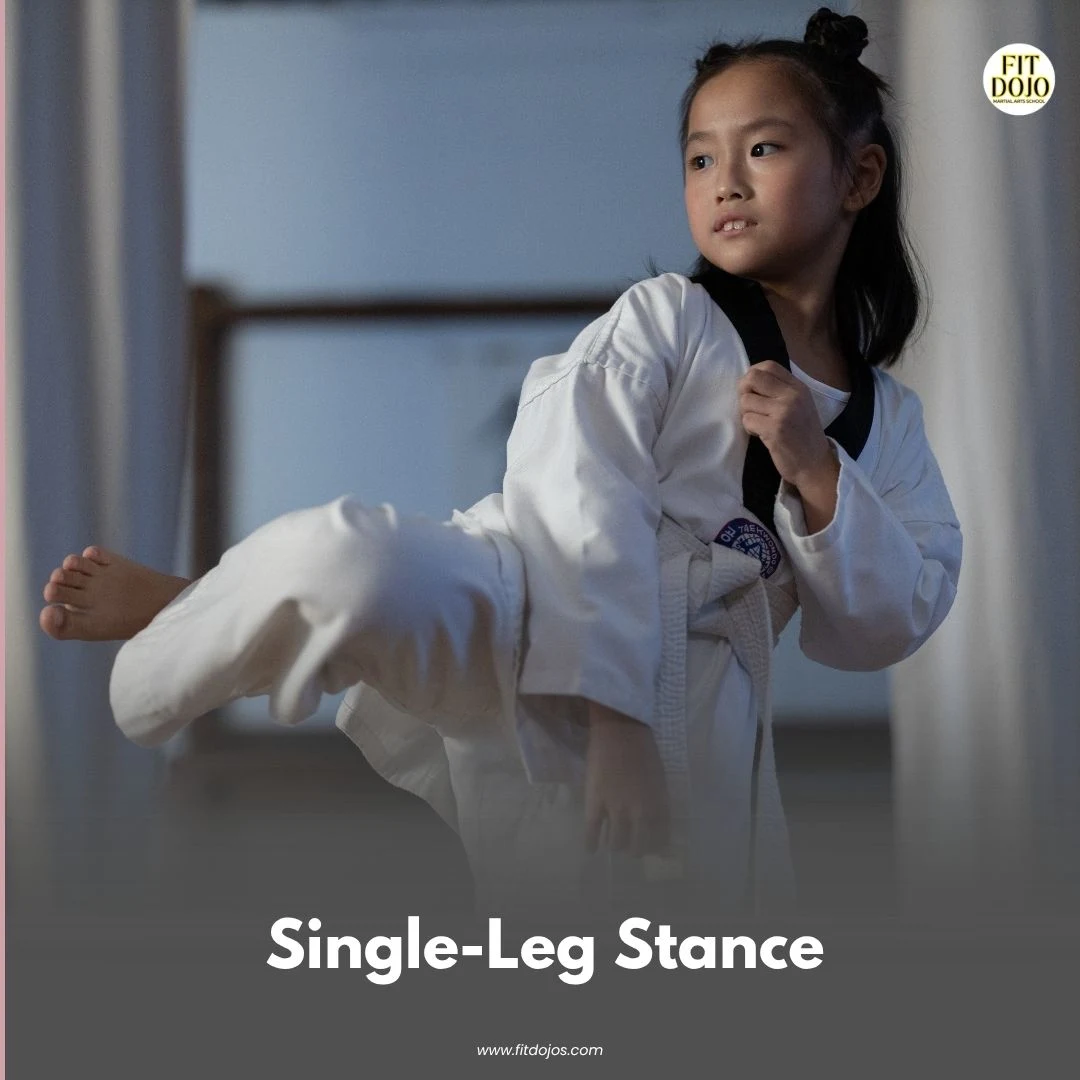
1. Single-Leg Stance
Stand upright and lift one foot slightly from the floor.
Keep your posture tall and avoid leaning unnecessarily. Hold the position for 20 to 30 seconds before changing sides.
Once that becomes easy, try moving your arms or slowly turning your head while maintaining control.
2. Knee Raise and Hold
Stand in your normal fighting position. Slowly raise one knee toward a kicking chamber and hold it.
Maintain an upright posture and keep the supporting foot stable. Hold briefly, lower with control, and repeat on both sides.
This starts connecting general stability training with a position you will actually use in martial arts.

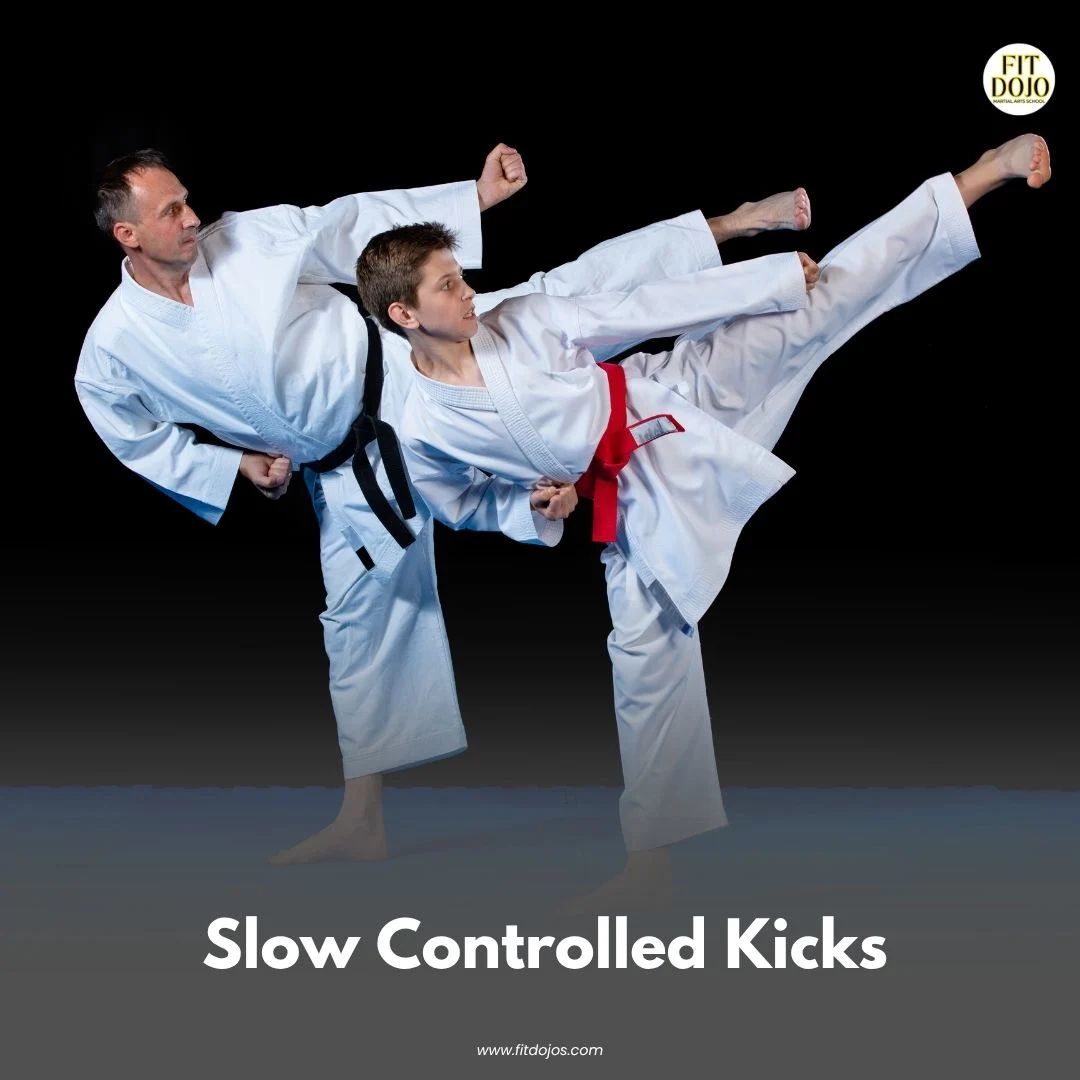
3. Slow Controlled Kicks
Instead of trying to kick as hard or fast as possible, perform the movement slowly.
For a front kick:
- Raise the knee.
- Pause briefly.
- Extend the lower leg.
- Pause again.
- Retract the leg.
- Return your foot to the floor under control.
If you cannot perform the movement slowly, speed may be hiding weaknesses in your technique.
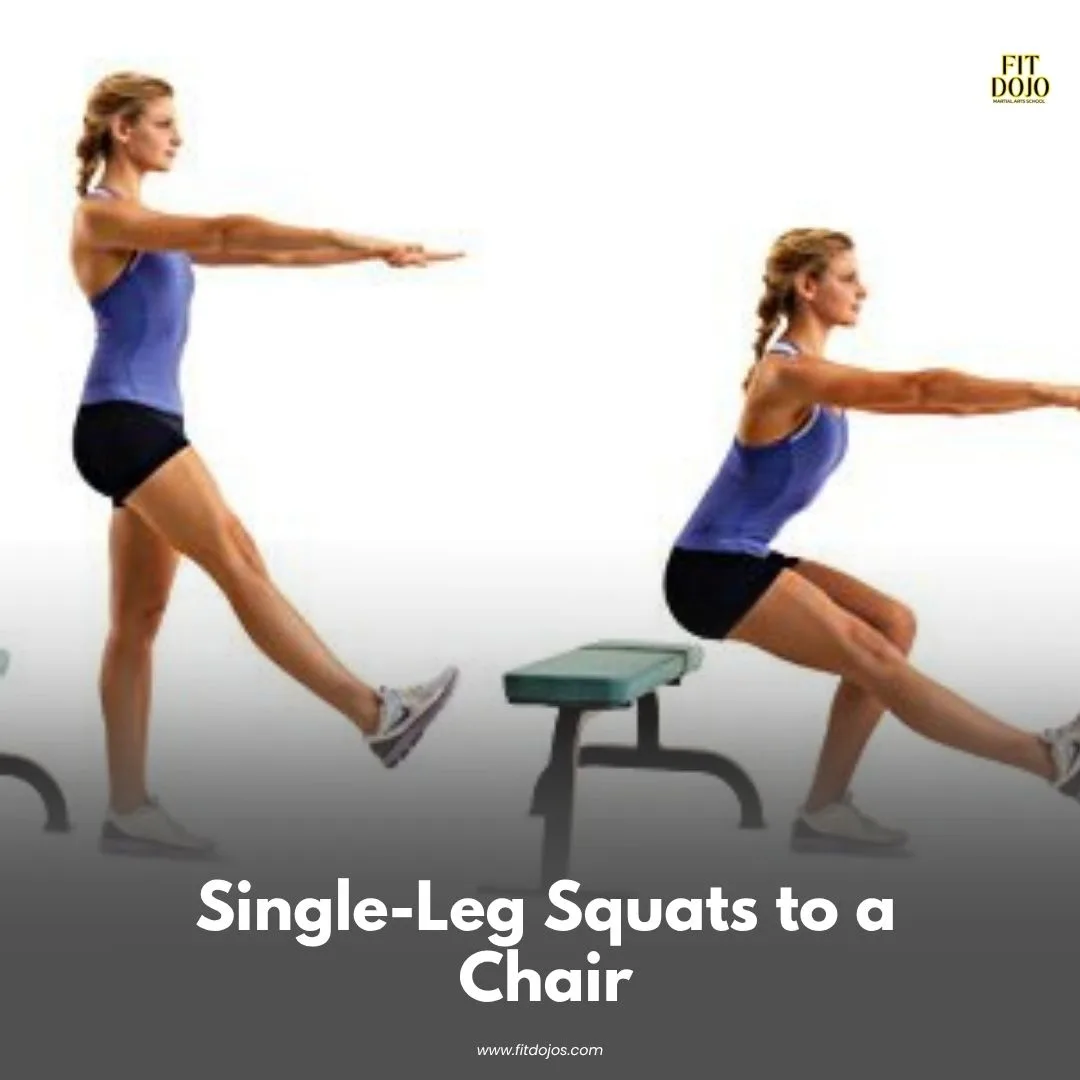
4. Single-Leg Squats to a Chair
Stand in front of a chair or bench and shift your weight onto one leg.
Slowly lower yourself toward the chair while keeping the knee controlled. Beginners can keep the opposite foot lightly on the floor for assistance.
This develops strength and control in the supporting leg.
5. Single-Leg Deadlift
Stand on one leg with a slight bend in the knee. Hinge forward from your hips while extending the other leg behind you.
Keep the movement slow and return to standing under control.
This challenges the hips, legs, trunk, and balance simultaneously.

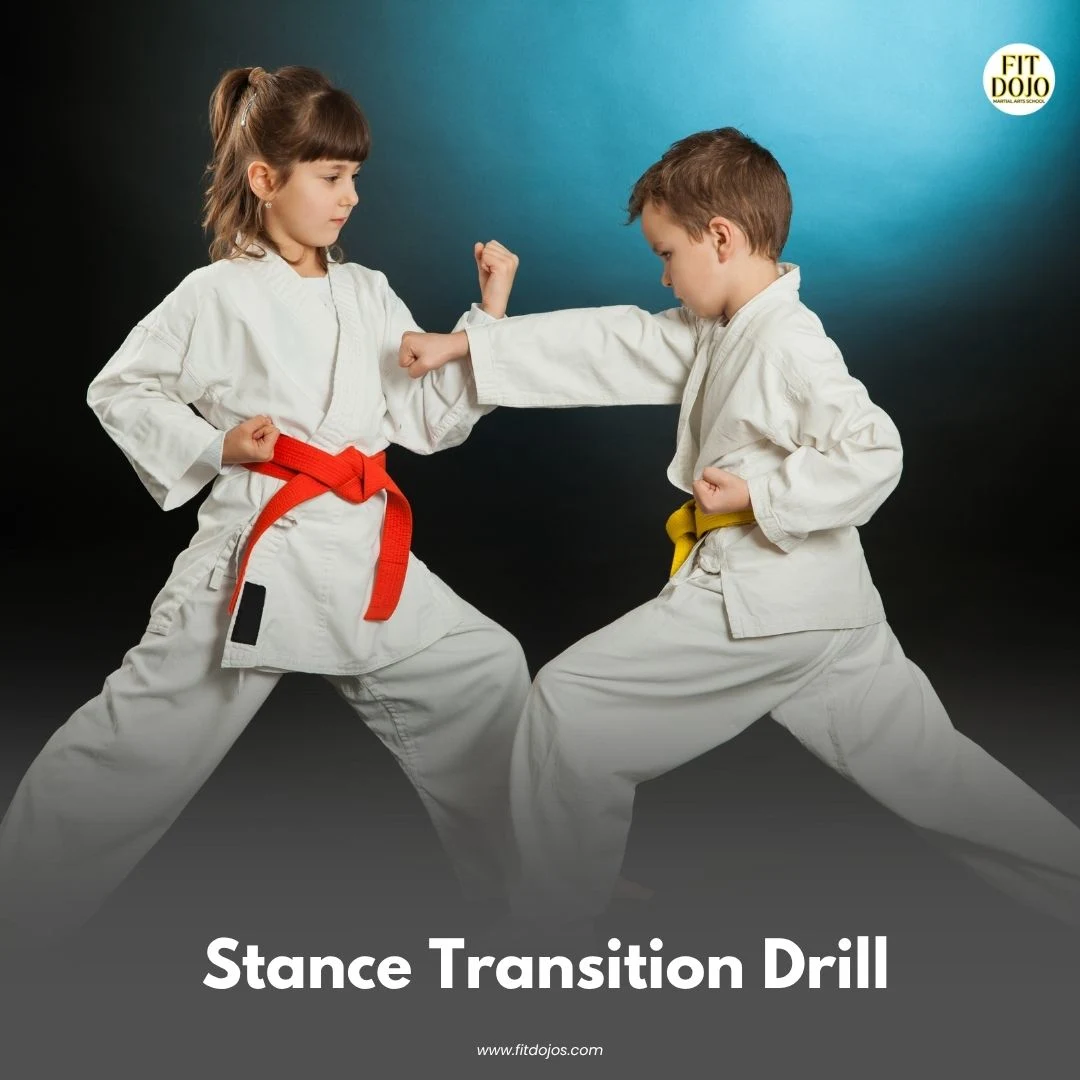
6. Stance Transition Drill
Move slowly between common martial arts stances.
Instead of rushing, pay attention to exactly when your weight transfers from one foot to the other.
The goal is to move smoothly without unnecessary bouncing or stumbling.
Takeaway: The best beginner balance exercises are simple enough to control but challenging enough to expose weaknesses.
What Exercises Improve Balance for Kicking?
If better kicks are your goal, make your balance exercises increasingly specific to kicking.
Start with a knee raise and hold. Progress to extending the leg slowly. Then practice retracting the kick without immediately placing your foot down.
A useful progression is:
- Hold the kicking chamber.
- Extend and retract one slow kick.
- Perform two kicks without touching the floor.
- Change the height or direction of the kick.
- Add normal speed while maintaining the same control.
For example, a karate beginner might be able to throw a front kick quickly but struggle to stop it midway. Practicing the kick slowly at waist height can develop the control needed before adding speed, height, or power.
Quality is more important than performing dozens of unstable repetitions.
Takeaway: If you want better kicking balance, practice controlling every phase of the kick, not just hitting the target.
Balance and Coordination for Kids in Martial Arts
For parents researching martial arts, balance and coordination are useful physical skills to consider.
Children do not need advanced balance workouts. Age-appropriate classes can incorporate balance through stance practice, controlled kicks, stepping drills, obstacle activities, and movement games.
For younger children, programs such as little kids karate can introduce foundational movement in an age-appropriate setting. Older children may be ready for a more structured teen karate program as their coordination, attention, and technical skills develop.
For example, an instructor might ask students to chamber a kick and freeze for several seconds before returning to their stance. A more playful class might use stepping patterns or controlled movement challenges.
The important part is appropriate instruction and progression. Children should learn good movement patterns rather than being pushed into difficult techniques before they are ready.
Martial arts training can also support broader personal development. Skills such as leadership and character building can develop alongside physical training when they are intentionally included in a school's teaching approach.
Takeaway: For kids, good balance training should combine learning, control, progression, and enjoyment.
Balance Training for Adults Starting Martial Arts
You do not need excellent balance before joining martial arts as an adult.
Many beginners arrive with limited flexibility, uneven coordination, or little previous athletic experience. A well-structured beginner program should help you build these skills progressively rather than expect you to already have them.
If you are considering starting, explore our adult martial arts classes to see how training can be adapted for adult beginners.
Adults interested in practical martial arts may also find that balance matters outside controlled drills. Maintaining position, moving safely, and recovering quickly are also relevant to real-world self-defence.
The goal at the beginning is not perfection. It is learning how to move with increasing control while building confidence in the techniques.
Takeaway: Adults do not need to get fit or perfectly balanced before starting martial arts. Training is where those skills are developed.
Common Balance Training Mistakes
Difficulty does not always refer to effectiveness.
Using unstable things right away because it appears difficult is a common error. Martial artists must create and manage movement against a solid floor, yet standing on an unstable surface might be beneficial.
Training simply static balance is another error. Balancing on one leg is effective but martial arts demands mobility, rotation, acceleration, and healing.
Additionally, do not practice every exercise until your technique becomes worse. Limit the effort if you frequently need to catch yourself, your knee falls inward, or your posture drastically changes.
Lastly, train both sides. Although many martial artists have a natural preference for one stance or kicking leg, it is important to address significant differences in control.
Takeaway: Progress balance exercises by improving control first, then adding difficulty.
How Often Should You Do Balance Training?
Exercises for balance don't have to take up an entire hour.
A quick balancing exercise routine two or three times a week could be a useful place to get started for beginners. Additionally, you can add a few drills to your technique practice or martial arts warm-up.
Try doing knee chambers, controlled kicks, single-leg holds, and stance changes for ten minutes.
Instead of just lengthening each exercise, slowly increase the level of difficulty of your movements as your control gets better.
Stop training and consult a qualified medical professional if you experience discomfort, persistent dizziness, or unusual balance problems..
Takeaway: A few minutes of consistent, high-quality practice can be more useful than occasional marathon balance sessions.
Choosing the Right Martial Arts Program
Balance training becomes more useful when it is connected to proper technique, progressive instruction, and regular practice.
When choosing a school, look for instructors who can explain why a movement works, adjust exercises for different ability levels, and help students progress without rushing them.
Parents should consider class structure, age grouping, teaching style, safety, and whether the environment helps children feel comfortable learning new skills. Adults should look for beginner-friendly instruction that develops technique before adding unnecessary intensity.
You can learn more about the instructors, philosophy, and training environment on our About Us page.
Takeaway: Good coaching turns balance exercises into skills you can actually use in martial arts.
Start Building Better Balance Through Martial Arts
Balance is not just the ability to stand on one leg. In martial arts, it means controlling your body while you strike, kick, step, turn, defend, and react.
Effective balance training combines stability, strength, mobility, technique, and coordination. Beginners should start with simple exercises, master controlled movement, and gradually progress toward martial-art-specific drills.
For parents, a well-structured martial arts program can give children regular opportunities to practice balance and coordination while learning new movement skills. For adults, you do not need excellent balance before joining a class. Balance is one of the skills you can develop through consistent practice.
Final takeaway: Build control first, then add speed, power, and complexity.
Ready to experience it for yourself? Whether you are looking for martial arts for your child or want to start training as an adult, the best way to understand the benefits is to step onto the mat.
Similar post
September 28, 2026
How Martial Arts Develop Leadership Skills

September 10, 2026
Why Sparring Fear Happens Even When You Know the Techniques