Preschool Karate: Benefits, Safety, Age & Complete Parent’s Guide

FIT DOJOS
Expert Team,
FITDOJOS.COM
Preschool karate basically is a playful activity class designed for kids from 3 to 5 years old. It keeps kids active while developing their listening, balance, and concentration skills. After they understand the basic instructions, most kids will be prepared, and a structured activity reduces contact while maintaining a high level of safety.
Imagine this, that your four-year-old claims they are a ninja, kicks a pillow, and runs across the living room. It's amusing, but you're also exhausted and thinking what to do with all that energy. You need an activity that burns it off and, most importantly, improves their listening skills as well.
That's where preschool karate can help. It's not about breaking boards or sparring with others. Young kids learn how to move, wait for their turn, and follow a leader in this organized, engaging activity.
Parents exploring broader martial arts options for parents and kids can also use this guide as a practical starting point.
What Is Preschool Karate?
Preschool karate refers to an early version of training developed especially for young kids. Children generally practice basic stances, blocks, guided strikes, balance, coordination, listening, and taking turns rather than extensive technical activities.
A qualified trainer is aware that a child who is four years old learns differently compared to a 10-year-old. Balancing on one foot, switching foot, practicing a single basic technique, or following a brief explanation could all be part of a lesson.
In addition to teaching karate, group involvement is also being trained. For this reason, it often works better to enroll a preschooler in a Little Kids Karate program rather than a class meant for older children.
The best preschool karate classes combine basic martial arts with movement, repetition, structure, and fun.
What Is the Best Age to Start Preschool Karate?
There isn't a single ideal age for every child. For many children, the age range of 3 to 5 is considered an appropriate age to attend an introductory class if the program is being planned just for preschoolers.
Similarly, one three-year-old may find it enjoyable to follow simple rules, participate in group activities, and imitate movements, while another might need more time to become comfortable or familiar in training.
Most parents ask if 3 years old is too early for Karate? No it's not early as for three-year-olds, karate should be fun, basic, and short enough to be suitable for their attention span. At this age, success could be engaging in the warm-up routine, waiting briefly for a turn, copying a posture, and leaving class with a bright smile.
When looking for martial arts for three-year-olds, parents need to look for the instructors who are patient, practice methods, and try trail class before enrolling.
Start karate when your child can enjoy and engage with the experience, not simply because they reached a particular age.
7 Benefits of Preschool Karate
Well-designed karate classes give young children repeated opportunities to move, listen, practise, make mistakes, and try again. The benefits come from consistent participation rather than expecting instant changes after one or two lessons.
- Coordination and balance: Stepping, turning, kicking, changing direction, and holding simple positions help children practise body control.
- Physical activity: Karate adds structured movement to a child’s week and can complement everyday active play.
- Listening practice: Children learn to watch the instructor, respond to short instructions, and wait for cues.
- Confidence: Learning a new movement or remembering a simple sequence can give children a genuine sense of achievement.
- Self-control: Karate involves starting, stopping, holding positions, and using techniques only when instructed.
- Social skills: Group classes give children opportunities to take turns, respect personal space, and participate alongside others.
- Routine: Regular classes create a predictable pattern of arriving, warming up, learning, practising, and finishing.
Parents interested in how movement, discipline, and mindset work together can also explore kids’ fitness through karate.
Preschool karate can support movement, confidence, listening, and positive habits within one structured activity.
Is Preschool Karate Safe?
Preschool karate is completely safe and risk-free as there are no physical activities, it is designed with controlled movement, careful guidance, and age-appropriate training.
It is inappropriate to treat young beginners as expert martial artists. Instead of focusing on direct contact, preschool training prioritizes movement quality, fundamental skills, coordination, and controlled practice.
Warm-ups and movement preparation also matter. Understanding concepts such as mobility training and healthy movement can help parents understand why good instruction goes beyond simply teaching kicks and punches.
Questions Parents Should Ask About Safety
- Does the preschool class involve contact or free sparring?
- How closely are children supervised?
- How are techniques modified for younger students?
- Are the training areas and equipment clean and maintained?
- What happens if a child becomes tired, distracted, nervous, or upset?
A trustworthy martial arts school should be comfortable answering these questions clearly.
Safe preschool karate starts with controlled skills, qualified supervision, and expectations suited to young children.
What Do Children Learn in Preschool Karate?
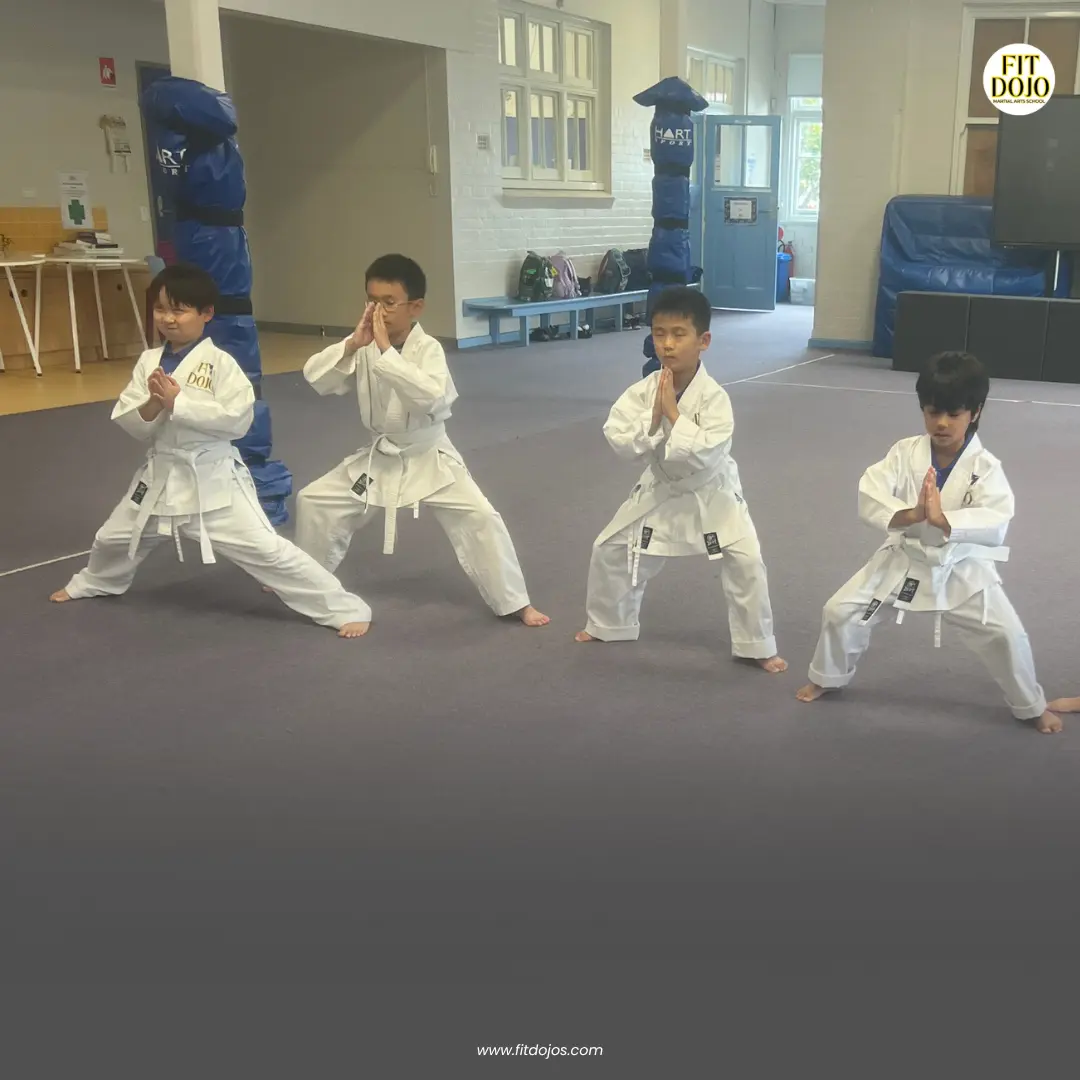
Preschoolers may learn introductory stances, blocks, punches, kicks, footwork, and simple combinations. The goal is not technical perfection. It is to build foundations that children can gradually improve as they grow.
Parents who want to understand the basics themselves can read more about common karate positions and stances.
Important learning also happens between techniques. Imagine a child hearing an instruction, copying the teacher, making a mistake, resetting, and trying again. Another child waits behind a floor marker until it is their turn.
These small moments encourage patience, body awareness, attention, and controlled responses. As children progress, activities that challenge reaction time in martial arts may also become part of their development.
At preschool age, learning how to participate is just as important as learning the karate technique itself.
What Happens in a Preschool Karate Class?
Every dojo has its own teaching style, but most good preschool classes follow a predictable routine. Familiarity helps young children understand what is happening and what is expected of them.
- A short greeting or class opening
- A playful warm-up
- Movement and coordination activities
- One or two basic karate techniques
- Target, balance, or reaction games
- A positive class finish
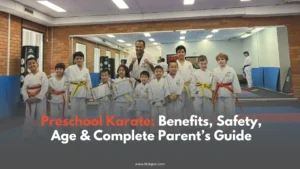
For example, an instructor might place coloured markers on the floor and ask children to move to red, hold a stance, and then return to blue. To the child, it feels like a game. At the same time, they are practising listening, balance, direction changes, and body control.
Understanding what a dojo means for kids can also help parents explain why the training space has particular rules, routines, and expectations.
Good preschool karate classes keep children engaged by combining structure with frequent changes of activity.
How Do You Know If Your Child Is Ready for Preschool Karate?
Before starting karate, your child doesn't have to be well-behaved, physically strong, or confident.
Try looking for easier signs of readiness. Your child might love active play, copy adults, follow simple instructions, or feel more comfortable playing in smaller groups by showing curiosity about martial arts.
For the shy child, joining karate in the future is not always justified by shyness. Before they feel comfortable getting involved, many children dedicate their first class observing others.
An instructor must let a child get comfortable in the area without putting excessive pressure on them. If your child is still unhappy or simply doesn't like the activity following a trial, doing it once more sometime later could potentially be a better option.
Readiness means your child can engage at their own level, not behave like an older student.
How Often Should Preschoolers Attend Karate?
Generally speaking, consistency is more beneficial, as for beginners, one or two appropriate practices per week may be less stressful than regular classes that become stressful.
Free play, climbing, running, jumping, outdoor activities, and relaxation should all be complemented with karate. Kids still require a lot of unstructured movement.
Practice at home can be minimal. You can reinforce learning without making your home a second training by asking your child to demonstrate a stance, block, or movement briefly.
Keep karate consistent enough to build familiarity and enjoyable enough that your child wants to return.
How to Choose the Right Preschool Karate School
The quality of the instructor and class environment matters more than flashy equipment or an impressive-looking belt display.
Visit the school if possible and observe how instructors speak to young children. Good teaching should be clear, patient, encouraging, and appropriately firm when safety or behaviour requires boundaries.
What Parents Should Look For
- A dedicated program for preschool or younger children
- Patient instructors who communicate clearly
- Strong supervision and sensible contact rules
- A clean and appropriate training space
- A balance between structure and fun
- Positive correction rather than embarrassment
- Clear communication with parents
- The opportunity to try a class before making a longer commitment
You can also learn more about FitDojos and its approach to martial arts training before deciding whether the environment suits your family.
Choose the dojo where your child is taught safely, patiently, and at their actual developmental level.
Frequently Asked Questions About Preschool Karate
What age can a child start preschool karate?
Many preschool programs accept children from around age three, but readiness matters more than age alone. A child who can participate briefly, copy simple movements, and follow basic directions may be ready to try an introductory class.
Is karate for 3 year olds safe?
It can be when the class is specifically designed for young children. Look for close supervision, controlled techniques, age-appropriate activities, and limited or no hard contact.
Will karate make my preschooler aggressive?
A well-run preschool karate program should emphasise control, rules, respect, and appropriate use of techniques. Parents should observe how instructors discuss behaviour and whether children are consistently taught that karate skills belong within a controlled training environment.
Does my child need a karate uniform immediately?
Not always. Some schools allow children to attend a trial lesson in comfortable active clothing before purchasing a uniform. Check with the school before your child’s first class.
What if my child will not participate in the first class?
Watching at first can be completely normal for a young child. Give them time to understand the environment and allow the instructor to build trust. A positive introduction is usually more valuable than forcing immediate participation.
Is preschool karate good for very energetic children?
It can provide a useful structured outlet because children get to move while also practising start-and-stop cues, listening, and simple routines. Karate should still complement plenty of everyday active play.
How many karate classes should a preschooler attend each week?
One or two age-appropriate sessions per week may suit many young beginners. The best schedule depends on the child, class length, other activities, and whether they continue to enjoy attending.
Final Thoughts: Is Preschool Karate Right for Your Child?
Preschool karate provides an exciting initial activity for children who love movement and are ready to develop skills such as confidence, coordination, listening, and basic routines.
Becoming a skilled martial artist at the age of three, four, or five is not the objective. The goal is to provide your child with a fun introduction to martial arts training, movement, education, and good manners.
Select an age-appropriate curriculum, pay attention to how the instructor interacts with younger students, and evaluate success by steady progress instead of excellence.
Find a safe class, let your child experience it, and see whether the dojo becomes a place where they feel comfortable learning and growing.
See How Your Child Feels on the Mat
The easiest way to know whether preschool karate is right for your child is to let them experience a class. Book a free trial at FitDojos and give your child the chance to move, learn, and discover karate in a supportive environment.
Similar post

September 10, 2026
Why Sparring Fear Happens Even When You Know the Techniques
September 10, 2026
Shadow Fighting Benefits for Martial Arts Training

September 6, 2026
Strength vs Speed: What Matters More in Martial Arts?