Barefoot Training: Why Martial Artists Leave Their Shoes at the Door
FIT DOJOS
Expert Team,
FITDOJOS.COM
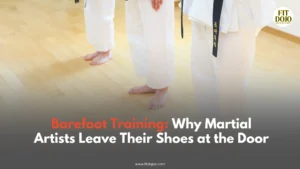
As you step into a karate, taekwondo, or Brazilian jiu-jitsu session, you immediately notice one thing before class begins: the shoes are kept outside. Barefoot training refers to an ancient martial arts practice. It influences the relationship between your feet and the floor, how you balance, turn and move.
Martial artists usually practice barefoot since it functions effectively on training mats, shields teammates from tough footwear, upholds dojo protocol, and provides the feet more direct feedback from the surface. If you're unfamiliar with the martial arts, and want to know how things work inside that dojo with training culture. Our guide to the Our guide to the meaning of a dojo discusses respect, behavior, and training traditions.
Takeaway: Bare feet are part tradition, part training tool, and part practical choice.
Why Do Martial Artists Use Barefoot Training?
IThe main reason martial artists train with barefoot is to increase grip on mats, improve balance and to build up their foot muscles through direct touch with the ground. Similarly, shoes with hard soles could harm the surface or unintentionally injure a training partner.
It is also simpler to feel differences in pressure beneath the foot when training without thick sole footwear. When the heel rises, the toes grip too tightly, or the body weight shifts too far forward, a beginner can usually tell. A beginner can usually feel that the toes grip too tightly, or the body weight shifts too far forward.
Imagine a student learning how to do a roundhouse kick. As the hips turn, the supporting foot must also spin. The student can determine whether the pivot is smooth, constrained, or unbalanced by training barefoot.
For students who want to understand stance mechanics in more detail, learning proper karate positions and stances can provide a useful foundation.
Takeaway: Martial artists train barefoot to respect the training space, move freely, and receive clearer feedback from the floor.
Which Martial Arts Are Practiced Barefoot?
Barefoot practice is common across several martial arts, although the reasons vary. Striking arts rely heavily on pivots, stance changes, and controlled kicking, while grappling arts need safe movement on padded mats without footwear scraping or striking another person.
| Martial Art | Usually Barefoot? | Why? |
|---|---|---|
| Karate | Yes | Stances, pivots, dojo tradition, and mat movement |
| Taekwondo | Usually | Kicking, turning, balance, and training tradition |
| Judo | Yes | Safe grappling and movement on tatami mats |
| Brazilian Jiu-Jitsu | Yes | Grappling safety and mat movement |
| Muay Thai | Usually | Kicking, footwork, and traditional training |
| Wrestling | No | Specialized wrestling shoes provide traction and protection |
At FitDojos, students can experience these principles through age-appropriate programs. Families can explore kids karate classes, while younger beginners may be better suited to martial arts for little kids.
Takeaway: Barefoot training is common across martial arts, but it is not a universal rule.
Benefits of Barefoot Training for Martial Artists
Better Ground Feedback and Proprioception
Proprioception is your ability to sense where your body is positioned without constantly looking at it. Removing thick footwear reduces the material between your feet and the floor, making subtle changes in pressure easier to notice.
That feedback becomes useful during stance work, balance drills, pivots, and changes in direction. It can also complement the skills involved in improving reaction time in martial arts, where body awareness and quick adjustments matter.
Balance and Stability
Martial artists frequently stand on one leg while kicking, shifting direction, or recovering from an attack. Barefoot drills can challenge the feet and ankles to manage those changes without relying on a rigid shoe for support.
Foot Strength and Mobility
Your feet contain many small muscles that help control the toes and arches. Research on barefoot and minimalist exercise suggests that progressive training may improve certain measures of foot strength and function.
That does not mean simply removing your shoes solves mobility problems. Good mobility training still requires controlled movement, appropriate exercises, and gradual progression.
Kicking, Striking, and Mat Movement
Without restrictive footwear, the toes can spread naturally and the foot can interact directly with the surface. In kicking arts, this also helps students become more aware of the striking surface of the foot and the position of the supporting leg.
Takeaway: Barefoot training can support awareness, balance, mobility, and movement quality when it is practiced correctly.
Does Science Support Barefoot Training?
Progressive training may result in beneficial changes in foot strength, balance, arch mobility, and neuromuscular control, according to studies on barefoot training. It is important not to overstate what those findings mean for martial artists.
A lot of the research that's been done so far looks at things like running, walking, strength training, or general exercise, but not specifically at martial arts. So, we can't be sure that training barefoot will make a person kick harder, react quicker, or stay injury-free.
The more logical idea is that taking off shoes alters the way the feet are used. When those demands are introduced slowly, they can help develop important qualities needed for athletic movement.
For children, barefoot movement should be considered one piece of a broader approach that also includes coordination, strength, confidence, and discipline. Our guide to kids fitness through karate explores how these qualities work together.
Takeaway: Science supports potential barefoot training benefits, but it does not support treating barefoot exercise as a shortcut.
Risks of Barefoot Martial Arts Training
Removing shoes also removes protection. Toes can be stubbed, caught, or stepped on. Rapid changes of direction can challenge the ankle, and poorly controlled kicks may expose the toes or top of the foot to impact.
Toe, Foot, and Ankle Injuries
Beginners sometimes grip the floor aggressively with their toes because they are trying to create stability. Others increase kicking, jumping, or pivoting volume too quickly. Both situations can create unnecessary stress.
Cuts, Skin Problems, and Hygiene
Maintaining cleanliness is essential while using shared mats. Athletes must keep their nails clipped, wash and dry their feet after practice, and stop from entering the training area with open wounds. Additionally, regular mat-cleaning procedures are necessary for martial arts schools.
If you are suffering from pain, unusual swelling, or wound, then it's best to avoid training and get advice from a professional rather than pushing through the issue.
Takeaway: Barefoot training removes footwear, not the need for good safety habits.
Barefoot Training vs Martial Arts Shoes
Neither choice is necessarily better. On padded mats, where the martial art usually happens without shoes, bare feet is appropriate. Outside, on uneven terrain, during some self-defense exercises, where footwear is an essential component of training, shoes might be more suitable.
In comparison to excessively cushioned sporting shoes, minimal footwear can serve as a good option by providing some protection while enabling more mobility. But footwear additionally changes the foot's interaction with the surface, friction, and pivoting.
Kickboxing provides a useful example. Training conditions can vary from barefoot technical work to sessions involving bags, pads, or different flooring. Students interested in striking-focused fitness can explore FitDojos' kickboxing classes to see how proper coaching shapes safe technique.
Takeaway: Choose footwear based on the martial art, training surface, and purpose of the session.
How to Start Barefoot Training Safely
If your feet are accustomed to supportive shoes all day, jumping immediately into high-volume barefoot training may be uncomfortable. Your feet, calves, ankles, and skin may all experience new demands.
- Start slowly. Begin with technical drills rather than long sessions of explosive movement.
- Use the right surface. Clean martial arts mats are very different from concrete, pavement, or rough outdoor ground.
- Build control first. Practice stances, slow footwork, balance, and controlled pivots before adding speed.
- Increase volume gradually. Give your feet and ankles time to adapt.
- Maintain good hygiene. Keep toenails trimmed, cover cuts, and clean your feet after class.
- Listen to pain. Normal effort and unfamiliar muscle fatigue are different from sharp or persistent pain.
Parents who want to train alongside their children may also enjoy exploring martial arts classes for parents and kids, where technique can develop in a structured family environment.
Takeaway: Adapt gradually and let your feet earn the workload.
Foot-Strengthening Exercises for Martial Artists
You do not need expensive equipment to develop stronger feet. Simple exercises performed consistently can improve control and prepare the lower body for martial arts movement.
- Short-foot holds: Gently draw the ball of the big toe toward the heel without curling the toes.
- Slow calf raises: Rise onto the balls of the feet under control, pause, then lower slowly.
- Single-leg balance: Stand on one foot while maintaining a relaxed, stable arch.
- Toe lifts: Practice lifting and lowering the toes while keeping the rest of the foot controlled.
- Stance transitions: Move slowly between martial arts stances while keeping pressure distributed through the foot.
As control improves, instructors may introduce hops, landings, faster pivots, and direction changes. Even everyday activities, such as balancing on one leg while brushing your teeth, can provide simple extra practice.
Takeaway: Strong feet are built through simple, consistent, progressive training.
Who Should Be Careful With Barefoot Training?
Not all people can benefit from barefoot exercise with the same approach. People suffering from foot or ankle injuries, prior surgery, severe pain, or low sensitivity should be very careful, before making major changes to their.
Beginners are subject to the same rule. Avoiding discomfort is not a sign of toughness. A certified martial arts instructor could change exercises, lower their intensity, or suggest a suitable progression.
If you are unsure what training environment fits your goals, you can learn more about FitDojos and our approach to martial arts training.
Takeaway: Smart training respects individual ability, injury history, and experience level.
Barefoot Martial Arts: Myths, Tradition, and Pop Culture
Martial artists are often shown barefoot in films, anime, and video games since it indicates discipline, toughness, tradition, or a link to ancient fighting methods. The real world is not as dramatic.
Not all proficient martial artists practice barefoot. Bare feet don't always strengthen every technique, deliver flawless grip, or make the feet more injury-resistant. The surface, moisture, movement, and personal skills all determine grip.
Barefoot training is useful because it fits certain martial arts and training environments, not because removing your shoes gives you superhuman abilities.
That distinction matters. Good martial arts training is built on repetition, coaching, awareness, physical preparation, and consistent practice.
Takeaway: Keep the tradition, but leave the mythology in the movies.
Should You Try Barefoot Training?
There are rules for barefoot training in martial arts. It can support natural pivots, test foot strength and balance, improve students; sense of the floor, and help them link with the traditions that have defined martial arts for decades.
There are trade-offs as well. Bare feet may indicate difficulties in foot and ankle control, offer less safety, and require good hygiene. The intention is not to demonstrate that training barefoot is always preferable to wearing footwear. Selecting the appropriate training approach for the skill, surface, and martial art is the primary objective.
Whether you're looking for a class for yourself, your kid, your child, or your entire family, proper instruction from a trainer provides a good understanding on how to move properly with or without shoes.
Ready to experience martial arts training for yourself? Step onto the mat, learn proper stance, balance, footwork, and technique with experienced instructors. Book your free trial at FitDojos and discover which program is right for you or your family.
Similar post
September 10, 2026
Why Sparring Fear Happens Even When You Know the Techniques
September 10, 2026
Shadow Fighting Benefits for Martial Arts Training
September 6, 2026
Strength vs Speed: What Matters More in Martial Arts?