Sparring Tips That Help You Stay Calm, Move Better and Learn Faster

FIT DOJOS
Expert Team,
FITDOJOS.COM
Sparring tips for beginners matter most when your skills and plan unexpectedly fades away right after an individual begins to hit back. Your breathing changes, and even basic combinations might become more difficult to perform.
You can maintain your composure, improve your movement, and develop the timing, control, and defense that make sparring beneficial if you take the correct strategy. Without seeing every round as a battle, you will gain insight into how to be ready, manage intensity, deal with fear, avoid usual mistakes, and get better.
What Is the Purpose of Sparring?
Sparring means controlled exercise performed with a partner that focuses on improving technique, not on hurting others. It requires you measure distance, timing, defense, and movement in real time. The main purpose of sparring is to combine timing, decision-making, and technique. A punch may appear fine when you hit on a bag, but when you deliver a punch at the wrong time or using an inaccurate distance, it fails.
Proper sparring develops your ability to recognize patterns, maintain stability, bounce back from challenges, and make good decisions when stressed. Since you have to identify attacks and react quickly, it might also help you with your reaction time in martial arts.
Sparring also develops qualities that go beyond striking. Consistent training can reinforce movement, discipline, and mindset, especially when students learn to stay composed rather than react emotionally.
Use sparring to test skills, not your ego.
When Should Beginners Start Sparring?
No person has to finish a certain amount of lessons before sparring. When participating in an open round, a beginner must be familiar with fundamental stance, mobility, defense, control, and sparring regulations. When you're ready should be determined by your coach.
Many students begin with restricted partner drills before progressing to freer rounds. Teenagers may start through structured teen karate training, while younger students benefit from age-appropriate kids karate classes where control and listening skills are developed first.
"Does sparring hurt?" is a frequently asked question. Beginner sparring shouldn't ever seem like an uncontrollable fight, however minimal contact can at times lead to discomfort.
Start when you can protect yourself, control yourself, and follow the rules.
What to Do Before Sparring
A better sparring round often starts before the timer begins. Preparation reduces unnecessary tension and makes it easier to focus once your partner starts moving.
- Choose the right partner. Work with someone who controls their power and respects your experience level.
- Agree on intensity. Be clear about what “light” or “technical” means before the round.
- Wear protective equipment. Follow the safety requirements set by your instructor and training facility.
- Set one goal. Focus on something simple such as your jab, guard, distance, or exits.
- Warm up properly. Prepare your feet, shoulders, hips, reactions, and breathing.
Improving your mobility training can also help you move more comfortably through stances, pivots, defensive movements, and kicks.
Clear expectations make sparring safer and more productive.
15 Sparring Tips for Beginners
The best sparring tips are often simple. Complicated tactics are difficult to remember when your heart rate rises, so build dependable habits first.
- Relax your body. Excess tension makes movements slower and wastes energy.
- Keep breathing. Exhale during strikes instead of holding your breath.
- Do not try to win. Treat every round as practice rather than competition.
- Control your power. Timing and accuracy matter more than hitting as hard as possible.
- Keep your guard up. Return to a defensive position after attacking.
- Stay balanced. Do not reach so far that you cannot move or defend afterward.
- Watch your opponent. Avoid staring at one glove, foot, or individual technique.
- Control distance. Learn when you can attack safely and when you need to exit.
- Use simple combinations. Two clean techniques are often better than five messy ones.
- Work on defense. Blocking, slipping, parrying, and movement deserve deliberate practice.
- Do not panic after getting hit. Reset your stance, breathe, and continue.
- Spar different partners. Different sizes and styles expose different weaknesses.
- Ask for feedback. A trusted partner or instructor may notice habits you cannot feel yourself.
- Work on one skill per round. A narrow focus can speed up improvement.
- Have fun. Curiosity makes learning easier and keeps frustration under control.
Strong fundamentals also depend on understanding stable karate positions and stances, especially when you are learning how to attack without losing your base.
Boxing Sparring Tips vs. Karate Sparring Tips
In sparring both boxing and karate do the same things which improve timing, distance, body language, and confidence, how you execute each technique is different. The greatest boxing sparring advice generally emphasizes maintaining a good guard, controlling distance with the jab, moving your head after combos, and making angles rather than standing straight in front of your opponent.
Avoiding loading up on each strike is also crucial in boxing. You can improve your accuracy, footwork, defense, and timing with controlled combinations. Beginners need to spend more time getting in behind the jab, completing combinations in a proper balancing stance, and moving away cautiously.

Handling a longer range, powerful entries and exits, stance execution, quick kicks, and knowing when to attack are all commonly highlighted in effective karate sparring tips. Speed and clean execution may be more important than lengthy combinations, based on the karate style and rules. Instead of being close and constantly exchanging, a karate student might spend more time moving in and out of range.
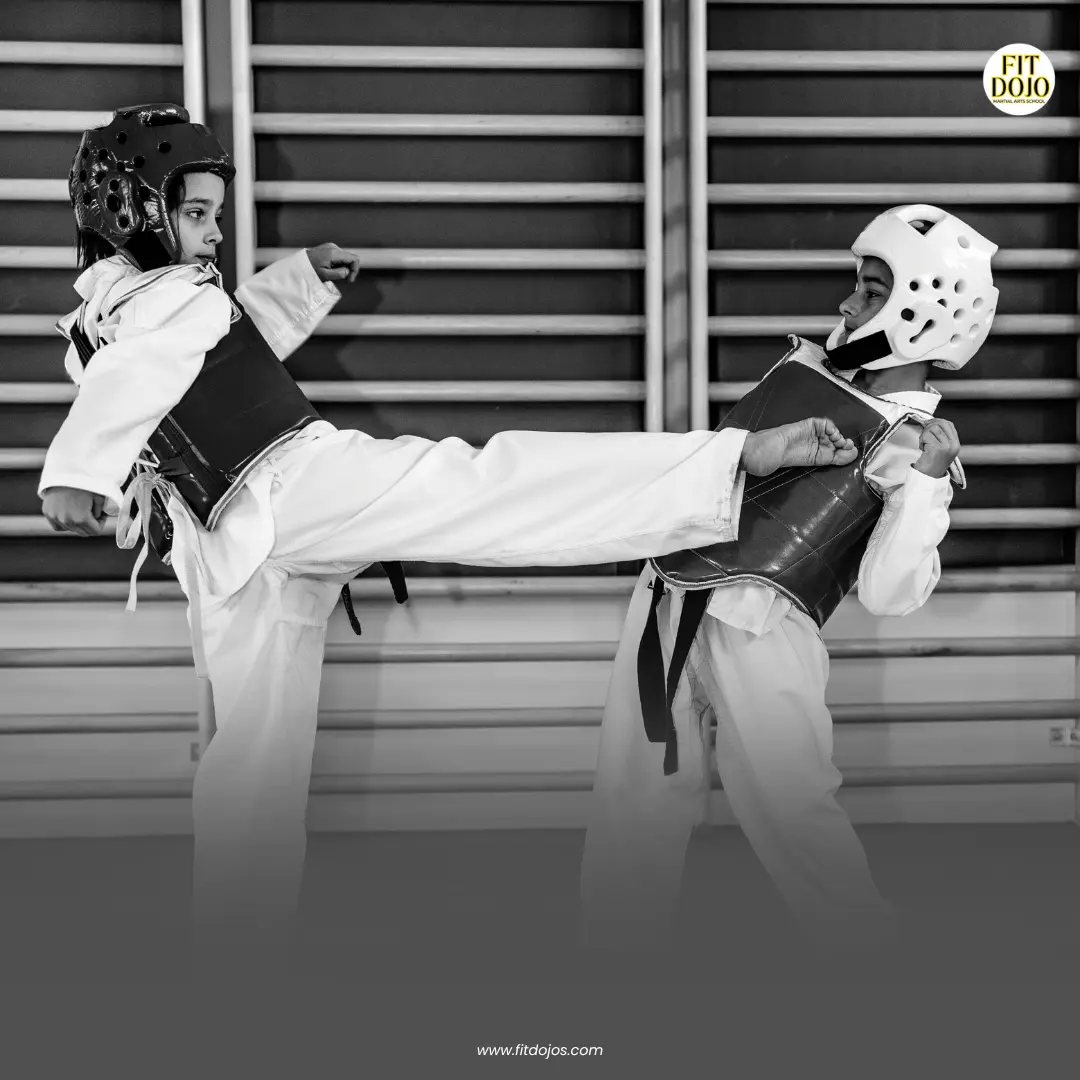
Keep your goals simple enough to remember when the round gets busy.
Sparring Tips: How Hard Should You Spar?
The majority of training sessions don't have to turn into hard sparring. You may play around with timing, movement, defense, and new techniques in an easy technical sparring without fear of any mistake you make.
When both partners maintain control, moderate rounds can put those same skills to the test under additional pressure. Intense sparring should be included in your instructor's training schedule, have a clear goal, and be monitored appropriately.
Higher intensity may not always result in greater value. If the pressure gets intense that you forget your strategy and just react accordingly, the round might end up in undesirable behaviors rather than improving them.
Use the lowest intensity that still teaches the skill you want to improve.
How to Stop Being Afraid of Getting Hit
Fear normally reduces by means of controlled action, not by throwing yourself right away into the most difficult round. Start with activities that are predictable, then as your confidence increases, slowly include unpredictability in training.
For instance, when you defend, let your partner only attempt jabs. Try jab-cross combinations after that. Next, use movement. Finally, proceed to gentle open sparring, where you must identify more attacks.
Go back to the three fundamentals if you freeze while sparring: breathe, keep your stance, and continue observing your partner. Removing all anxiety is not the objective. It is to continue working despite being under pressure.
Confidence grows when pressure increases gradually enough for you to keep learning.
What to Do If Your Sparring Partner Goes Too Hard
Do not answer excessive force with even more force. Tell your partner clearly, “Can we bring the power down?” A responsible training partner should adjust immediately.
If they continue hitting harder than agreed, stop the round and speak with your instructor. Sparring is cooperative practice even when both people are actively trying to land techniques.
Remember: Control is part of martial arts skill. You do not have to stay in an unsafe round.
Good sparring partners help each other improve, not prove who can hit harder.
Common Beginner Sparring Mistakes
Beginners often repeat the same mistakes because pressure makes them fall back on instinct. Recognizing those patterns is the first step toward fixing them.
- Going too hard too early
- Holding your breath
- Closing your eyes during attacks
- Turning away from incoming strikes
- Throwing only single techniques
- Trying complicated combinations before mastering simple ones
- Standing still after attacking
- Losing technique when tired
Fix one problem at a time. If you keep dropping your guard, spend a round focusing only on returning your hands after every attack. If combinations make you freeze, temporarily limit the attacks your partner is allowed to throw.
Fix one repeatable mistake before chasing advanced techniques.
Sparring Drills That Will Make You Better
Structured drills bridge the gap between predictable technique practice and fully open sparring. They reduce the number of decisions you need to make so you can improve one skill at a time.
- Jab-only sparring: Develop distance, timing, defense, and footwork using one attack.
- Defense-only rounds: One partner attacks lightly while the other concentrates on blocking, parrying, slipping, or moving.
- Counter-only rounds: Defend first, then answer with one controlled counterattack.
- Restricted combination rounds: Limit yourself to selected combinations until you recognize opportunities naturally.
- Light technical sparring: Bring several skills together while maintaining controlled contact.
Imagine a beginner who repeatedly forgets combinations after the round begins. Instead of asking them to use everything they know, the instructor might restrict one round to jab-cross and another to jab-cross-hook. Once those actions become comfortable, additional options can be introduced.
Restrictions can make sparring more useful, not less realistic.
What to Do After Sparring
Once you are done with sparring, allow yourself to spend a few minutes reviewing the session. You need to evaluate yourself for what succeeded, things did not work, whether you maintained your composure, and whether you achieved the objective that you set.
Next, request one insightful observation from your partner or instructor. Stop from requesting 10 to 15 corrections at the same time. You can bring something useful to the following training session or sparring with one particular improvement.
If you begin to feel uneasy after consequence or show unpleasant signs after sparring, look for proper medical attention.
The round teaches you once, but reviewing it lets you learn twice.
How Often Should You Spar?
Beginners often ask, “How often should I spar?” There is no universal schedule. The right frequency depends on your martial art, experience, goals, intensity, recovery, and your instructor's overall training program.
A light technical session is very different from repeated hard rounds. Quality matters more than simply collecting rounds. If fatigue constantly destroys your technique, additional sparring may not automatically create additional improvement.
Adults interested in structured martial arts training can explore adult martial arts classes and discuss an appropriate progression with an instructor based on fitness level and experience.
Spar often enough to learn, but recover well enough to return sharp.
Conclusion: Use These Sparring Tips to Learn From Every Round
The most effective sparring tips are hardly flashy. Breathe, be calm, maintain your distance, use basic techniques, talk to your partner, and give each round a clear goal.
To get better, you don't have to "win" sparring. Rounds must be difficult enough for you to analyze, respond, defend, and adjust without losing control.
If you want to learn more about the training philosophy, instructors, and community behind the programs, visit the FitDojos About Us page.
Spar to learn, stay controlled, and leave every round with one lesson for next time.
Ready to Put These Sparring Tips Into Practice?
Learning about timing, movement, distance, and control is informative, yet such skills develop quicker once you practice with your partner in training.
FitDojos could support you in developing solid basics in an organized training setting, regardless of your level of experience with martial arts.
Book your free trial at FitDojos and experience a class for yourself.
Start with control, train with purpose, and let every round make you better.
Similar post
September 10, 2026
Why Sparring Fear Happens Even When You Know the Techniques
September 10, 2026
Shadow Fighting Benefits for Martial Arts Training

September 6, 2026
Strength vs Speed: What Matters More in Martial Arts?