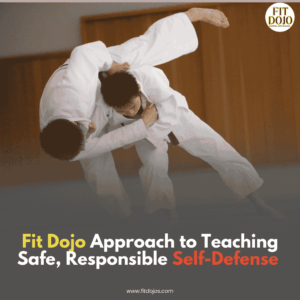
The Fit Dojo Approach to Teaching Responsible & Safe Self-Defense
FIT DOJOS
Expert Team,
FITDOJOS.COM
Child-Safe Approach to Modern Self-Defense Education
Every parent wants their child to be confident, capable and safe. But in today’s world, safety looks different than it did years ago. Kids face social pressure, digital risks, bullying and real-life unpredictability. That is why many families search for options like karate classes near me, mixed martial arts dojo or self defense classes for kids.
But here is the big truth. Self defense is not about teaching kids to fight. It is about teaching them how not to. At Fit Dojo, that is our entire teaching philosophy.
Real self defense starts long before anything becomes physical.
The Biggest Mistake Parents Make About Self Defense
A lot of people think self defense equals punching, kicking or overpowering someone physically. But real self defense begins long before any physical action happens.
Most threats are avoided through awareness and confidence, not combat. Children learn how to recognise danger, how to set boundaries and how to leave a situation safely without escalating it.
One parent once said, “I do not want my child learning to hit.” After their first class, they were surprised to see their child practising staying calm, using their voice and learning how to step away from conflict. No hitting at all.
Real self defense starts before anything becomes physical.
The Fit Dojo Philosophy of Safe, Responsible Training
Fit Dojo teaches a self defense system built on responsibility, respect and self control. Before kids learn any technique, they learn the values behind using it.
We remind our students that with skill comes responsibility. They are taught that the strongest person in the room is often the one who never needs to prove it. We do not want kids to win fights. We want them to avoid them with confidence.
Many kids start their journey in our kids karate classes, where the focus is on character, safety and steady growth rather than just flashy moves.
The three pillars we teach
- 🧠 Awareness – noticing people, places and feelings before something becomes a problem.
- 🚧 Boundaries – using voice, body language and decisions to stay safe.
- 🕊️ Response control – choosing calm, thoughtful actions instead of reacting emotionally.
Self defense is discipline and responsibility working together.
How Fit Dojo Teaches Self Defense Safely Step by Step
We use a clear and structured step-by-step system so kids always know what they are learning and why. Every drill has a purpose and every technique is taught with safety first.
Step 1. Awareness training
Kids learn how to spot unsafe situations, understand personal space and recognise emotional shifts in others. They develop alertness without fear.
Step 2. Boundary setting
Using their voice confidently is often more powerful than a punch. We teach kids how to say “Stop” firmly, how to use strong body language and how to project confidence.
Step 3. Escape and evasion skills
Running away is not cowardly. It is smart. Kids learn how to move quickly, create distance and find safe exits. They understand that the first goal is always to get to safety.
Step 4. Controlled physical responses
If a situation becomes unavoidable, kids learn basic defensive movements that protect them without causing harm. These skills are low-risk, simple and always supervised.
Step 5. Reflection after practice
After drills, we ask questions like “What did you notice?” or “What choices did you make?” This helps kids connect training to real-life thinking and decision making.
We teach kids when to act, how to act and when not to act.
The Psychology Behind Responsible Self Defense
Kids do not become responsible by accident. They become responsible when they are taught structure, calmness and controlled reactions, again and again, in a safe setting.
Through karate, children get to practise all three. Through repetition and safe drills, they learn to manage stress, pause before reacting and make thoughtful decisions instead of emotional ones.
Most real-world conflicts end through communication, not physical action. Our training prepares kids to use their mind before their muscles. They learn that walking away with confidence is often the best win.
Confidence reduces aggression. It does not create it.
What Makes Fit Dojo Different From Other Martial Arts Schools
Parents often tell us they tried other martial arts studios before joining Fit Dojo. What makes us different is our child-centered system, safety standards and family-focused culture.
- ✅ Slow, safe progression – kids grow at their own pace, with clear steps and goals.
- ✅ Coaches trained in child behaviour – instructors know how to connect with shy, energetic or anxious kids.
- ✅ Safety first, always – controlled contact, padded environments and clear rules.
- ✅ Values-based curriculum – respect, humility, focus and responsibility are built into every class.
- ✅ Supportive community – we celebrate effort, not perfection.
If you want to learn more about who is teaching your child, you can explore the story behind the dojo and instructors on our About us page.
Fit Dojo trains confident kids, not reckless fighters.
How Parents See Results at Home and School
The benefits of responsible self defense training show up far beyond the mat. Parents often share how their child changes at home and at school once they start consistent training.
- 🏡 At home – kids listen better, argue less and handle frustration more calmly.
- 🏫 At school – they stand taller, speak up more clearly and handle social pressure with more confidence.
- 🧩 Emotionally – they learn to breathe, think and then respond, instead of reacting impulsively.
A student named Mia joined because she felt scared walking around school. Three months later she was walking taller, speaking clearly and handling playground drama with maturity. She never needed to use a physical technique. Her confidence did the work for her.
For families who want to train together and reinforce these skills at home, our parents and kids classes offer a shared way to build fitness, communication and trust.
Self defense training creates calmer, more capable kids everywhere.
When Kids Should Use Self Defense And When They Should Not
One of the most important lessons we teach is that self defense is not for showing off or proving strength. It is only for staying safe when there is no other option.
We give kids a simple decision path they can remember under pressure:
- Avoid if possible – walk away, move seats, stay near trusted adults.
- Say no with confidence – use a strong, clear voice and firm body language.
- Tell an adult – ask for help from a parent, teacher or guardian.
- Defend only as a last resort – only if there is no way out and they are being physically harmed.
- Seek help afterwards – talk to an adult and explain what happened.
Kids learn that self defense is not about being the toughest kid in the room. It is about staying safe and doing the right thing, even when the situation is difficult.
Self defense is always the last option, not the first.
Conclusion. Safe, Responsible Self Defense for Modern Kids
Today’s kids need more than just techniques. They need awareness, confidence and emotional strength. The right kind of self defense training gives them all three, in a structured and supportive environment.
At Fit Dojo, we do not just teach blocks and kicks. We teach judgment, self control and respect. We want kids to feel strong enough to walk away, brave enough to speak up and prepared enough to protect themselves if they ever really need to.
Families looking for a trusted karate studio or martial arts school in Rockdale can explore our full range of age-specific programs, from little kids through to teens and adults, including our dedicated teen karate pathway.
The best self defense system protects your child’s body and their character.
Similar post