Why Respect Is the First Lesson and the Last Lesson in Every Class
FIT DOJOS
Expert Team,
FITDOJOS.COM
Respect First, Respect Last: The Core Lesson of Every Class
Parents often come to us asking for confidence, discipline, focus, or better behaviour. What they do not always realise is that all of those skills begin with one core value. Respect. It is the foundation of martial arts and the reason karate for kids works so well for personal growth.
One dad told us, “My son would not listen to anyone at home. After a few weeks at Fit Dojo, he started saying please, thank you, and sorry without being asked. I could not believe the change.” This transformation does not come from kicks and punches. It comes from learning respect in a structured, positive, values driven environment.
To learn more about our story and what we stand for, you can visit the Fit Dojo about us page where we share our values and training philosophy.
Respect is the first thing we teach, the last thing we reinforce, and the most important thing your child carries out into the world.
What Respect Really Means in Martial Arts
Most people think respect means bowing or using polite language, but in martial arts it is much deeper. Respect is a way of showing who you are through your actions, not just your words.
🌱 Respect as Awareness
Kids learn to be aware of others, their space, and their own behaviour. This awareness helps them make better choices in the dojo, at school, and at home.
🧘 Respect as Self Control
Respect teaches kids to stay calm when frustrated and to think before reacting. Instead of snapping back or losing their temper, they learn to pause and respond.
🎒 Respect as Responsibility
Students learn to pack their gear, show up prepared, and take ownership of their progress. They begin to understand that effort and attitude matter as much as skill.
❤️ Respect as Kindness
Every student is treated with care and fairness. We lift each other up and help each other grow. Respect is shown in how students encourage, support, and protect one another.
Respect is not forced. It is practiced, modelled, and absorbed through every part of training.
Catchphrase. Respect is strength in calm form.
Why Respect Is the First Lesson We Teach
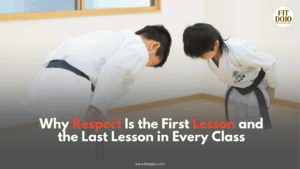
Before the first kick or punch, before learning a stance or a block, students learn how to enter the dojo with respect. This sets the tone for everything that follows.
🙇 Bowing at the Door
Bowing teaches kids to switch their mind from play mode to focus mode. It helps them reset, leave outside distractions behind, and prepare for learning.
🏯 Gratitude for the Space
Respect begins by acknowledging the place where they grow, learn, and improve. The dojo becomes more than a room. It becomes a space for personal development.
🛡 Setting the Stage for Safety
Respect ensures kids listen, follow instructions, and train safely. When students respect rules and boundaries, everyone can learn without fear of getting hurt.
🧠 Preparing the Mind
Karate is mental before it is physical. A respectful mindset helps kids learn faster, handle feedback, and feel more confident trying new things.
Respect prepares the class to begin in harmony, not chaos, which is why it is always our first lesson.
Catchphrase. A focused mind begins with respect.
How Respect Shapes Every Class
Respect is not a single moment. It flows through every drill, interaction, and lesson from the warm up to the final bow.
👂 Listening Skills
Kids learn to pause, listen, and respond. This skill translates directly to better behaviour in school and at home, because they practice listening with intent in every class.
🤝 Partner Etiquette
Students learn how to work with others safely, gently, and respectfully. They discover how to hit pads with control, support a partner, and say thank you after every drill.
🧹 Respect for Space and Equipment
Putting pads away, lining up properly, and taking care of gear builds responsibility and discipline. They learn that how they treat things reflects how they treat people.
🥋 Respect for Instructors
This is not about fear. It is about trust, teamwork, and appreciation. When students respect their instructors, they listen better, learn faster, and feel more supported.
Our dojo culture revolves around respect that is felt and lived, not just spoken about.
Catchphrase. Respect guides every movement.
Why Respect Is the Last Lesson We End With
Every class ends the same way it begins. With respect. This helps kids anchor what they have learned and carry it out of the dojo.
🫡 Bowing Out
Bowing at the end of class signals that training time is complete. It gives students a clear emotional and mental end point.
🙏 Ending with Gratitude
Students thank each other and their instructors for the training, effort, and support. Gratitude helps them feel more positive and connected.
🧭 Reflection and Self Evaluation
We encourage kids to think about what they learned, what they did well, and what they can improve next time. This builds self awareness and growth mindset.
🏡 Carrying Respect Home
Parents often notice better manners and calmer behaviour after class. The lesson of respect continues at the dinner table, during homework, and at school.
The final bow is more than a gesture. It is a reminder to act with respect throughout the day.
Catchphrase. The last bow is a promise to be better tomorrow.
How Respect Builds Confidence and Discipline in Kids
Respect is not just polite behaviour. It is a psychological tool that shapes a child’s character and confidence from the inside out.
😌 Respect Reduces Anxiety
Clear rules and routines help kids feel safe and confident. When they know what is expected, they can relax and focus on doing their best.
🧠 Respect Improves Emotional Regulation
Kids learn to manage frustration, express themselves better, and stay calm even when they are challenged in class or at school.
⭐ Respect Builds Leadership Skills
Kids who practice respect naturally become leaders among their peers. They learn how to encourage others, set a good example, and support younger students.
🚫 Respect Helps Prevent Bullying
Kids who are confident and grounded are far less likely to be targeted or to become bullies themselves. They understand the impact of their actions and choose kindness over cruelty.
This is why parents searching for karate classes near me or martial arts studio options often choose values driven schools like Fit Dojo.
Catchphrase. Confidence grows from a respectful heart.
Case Study. The Child Who Learned Respect and Found Confidence
Eight year old Sam was struggling at school. He talked back, interrupted teachers, and had trouble keeping friends. His parents brought him to Fit Dojo hoping karate would help.
In week one, Sam struggled to stay still or listen. He wanted to move all the time and did not like being corrected.
- 📅 Week two. He bowed at the door without being told and started lining up properly.
- 🤝 Week five. He began encouraging other students and saying “good job” to his training partners.
- 🏅 Week eight. His teacher emailed home saying, “Sam has made a huge improvement in class behaviour and leadership.”
His mum told us, “Karate gave him a sense of pride and responsibility I have never seen before.” Respect changed Sam. It can change any child.
Catchphrase. Respect can change a child’s entire world.
The Science Behind Respect and Behaviour Development
Respect based training is not just traditional. It is supported by research in child development and psychology, which is why many parents and teachers recommend structured martial arts for behaviour and focus.
🧠 Neuroscience of Routine
Routines help children develop stronger decision making skills and emotional regulation. Repeated respectful behaviours build stable patterns in the brain.
😌 Respectful Environments Reduce Stress
Kids thrive when they feel safe, supported, and guided. A positive dojo environment lowers stress and makes learning easier.
📊 Credible Stat
Studies show children in structured activities like martial arts demonstrate significantly better behaviour and self management in school, with improvements reported around focus, listening, and self control.
Respect strengthens both the mind and the body, helping kids handle challenges more calmly and confidently.
Catchphrase. Respect strengthens the mind as much as the body.
Why Fit Dojo Treats Respect as a Life Skill, Not a Technique
Respect is not a karate move. It is a life skill your child carries everywhere, long after class is over.
🥋 Respect as Daily Practice
We reinforce respect in every drill, every correction, and every celebration. It becomes part of the way students think and act.
👨🏫 Instructors Who Model Respect
Kids learn best by example. Our instructors embody patience, kindness, and leadership, showing students what true respect looks like.
🧑🤝🧑 A Dojo Culture of Support
Students encourage, support, and uplift one another. No one is left behind, and effort is always recognised.
🏫 Beyond the Martial Arts Studio
Respect helps with homework, friendships, school behaviour, and family life. Parents regularly tell us their home life improves dramatically after their child starts training.
For younger children who need a gentler start, our little kids karate program introduces respect, focus, and listening skills in a playful and age appropriate way.
Catchphrase. Where respect leads, progress follows.
Start Your Child’s Respect and Confidence Journey at Fit Dojo
If you want your child to develop confidence, discipline, self control, and strong character, respect is the foundation. Fit Dojo teaches respect on day one and reinforces it every day after.
Our structured kids karate classes help children become focused, grounded, confident, and respectful both inside and outside the dojo. For families who want to share the experience together, our parents and kids classes are a powerful way to train, connect, and grow side by side.
Whether your child is shy, energetic, or somewhere in between, a values driven martial arts studio like Fit Dojo can help them build a respectful mindset that lasts a lifetime.
If you are ready to give your child skills that go far beyond the mat, respect based karate training is a strong place to start.
Catchphrase. Respect is learned, trained, and lived.
Similar post