Is Karate Safe for Young Children? A Parent’s Guide to Injury Prevention and Dojo Safety

FIT DOJOS
Expert Team,
FITDOJOS.COM
Karate Safety for Young Children: What Parents Need to Know
If you are a parent thinking about karate classes for your child, safety is probably the first thing on your mind. You might picture flying kicks, loud shouting, or kids crashing into each other. It is completely normal to wonder if your child is ready or if the environment is safe enough for young beginners.
The good news is that karate for kids is built around structure, gentleness, discipline and body control. Not wild sparring. Not uncontrolled contact. Not fighting. In a well run martial arts studio, safety is designed into every part of the class.
One of the most common stories we hear at Fit Dojo starts with a parent whispering, “My child is excited but I am not sure if karate is safe.” By the end of the first class, that same parent usually says, “This is structured, calm, friendly and incredibly safe.”
Karate done right is one of the safest physical activities a child can participate in.
Section summary: Karate is far safer than most parents assume.
The Truth About Karate Safety for Young Children
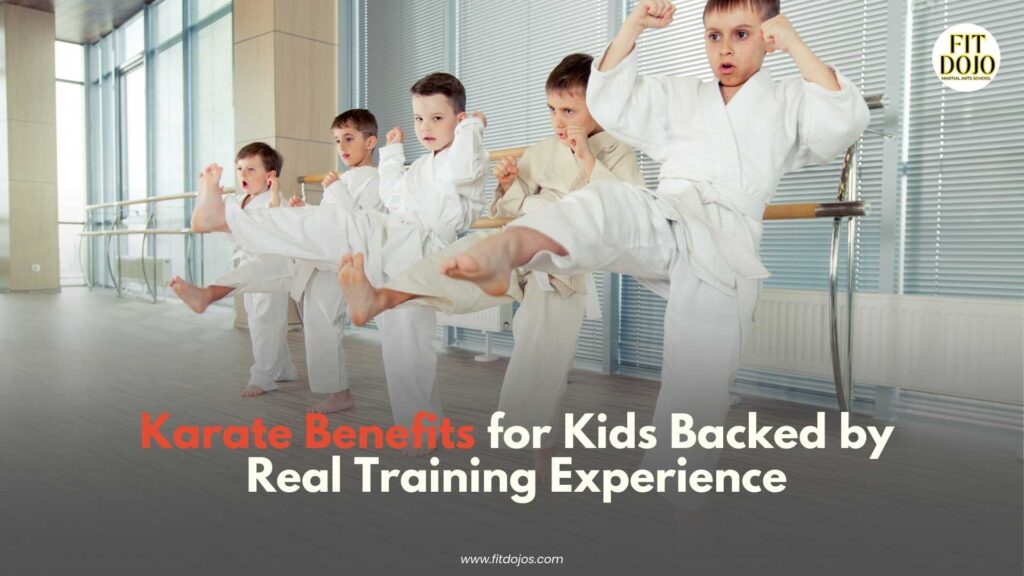
Many parents picture karate as an aggressive combat activity. In reality, professional kids karate programs focus on control, technique and discipline long before anything that looks like self defense. For younger age groups, it looks more like structured play with a purpose than like a fight.
Compared to fast moving contact sports such as soccer or basketball, karate is actually slower and more controlled. Movements are broken down step by step and supervised closely. Children are taught how to stand, how to fall safely, how to move with balance, and how to stop on command.
Research and industry reports show that traditional martial arts have a relatively low injury rate because:
- Every technique is taught in a progressive way, from simple to advanced, so children are never thrown in the deep end.
- Coaches are trained to monitor fatigue, focus and form, and can slow down or pause activities instantly.
- Safety rules are clearly explained and repeated every session, so children understand what is ok and what is not.
The goal is not to hit. The goal is to learn focus, coordination, respect and confidence while staying safe.
Section summary: Karate is structured, supervised and statistically safer than many popular kids sports.
What Makes Fit Dojo Safe for Kids
A safe dojo is not an accident. It is the result of systems, trained coaches and consistent structure. At Fit Dojo, safety is built into everything from the lesson plan to the flooring.
Here are some of the ways Fit Dojo creates a safe training space for children:
- Age based classes: Younger children train separately from older kids and teens, so drills, pace and expectations are always appropriate.
- Qualified, kid friendly instructors: Coaches are trained not only in martial arts, but also in communication, classroom management and child psychology basics.
- Structured warmups: Sessions start with gentle, joint friendly warmups that prepare growing bodies for movement.
- Control before contact: Children learn stances, blocks, footwork and awareness long before any controlled partner work.
- Clear behaviour rules: Students are taught “dojo rules” that focus on respect, listening and safe movement.
One parent told us, “I came in worried my child might get hurt. After watching your coaches, I felt calmer than I do at the local playground.”
Safety is not a single feature. It is a culture that runs through every part of class.
Section summary: Fit Dojo uses layered systems and coaching to keep kids safe and supported.
How Children Learn Discipline and Control in Karate
Kids do not just learn karate moves. They learn how to move responsibly. In a world full of screens and distractions, this is powerful.
Through consistent training, children develop:
- Listening skills: Kids are taught to stop, listen and respond to clear instructions, often on the first call.
- Impulse control: Children practise waiting for their turn and holding their stance until they hear a command.
- Spatial awareness: They learn to keep safe distance from others, line up correctly and move without bumping.
- Emotional control: They learn to handle frustration, keep trying and celebrate progress instead of perfection.
All of these skills reduce injury risk and improve behaviour at home and school. A child who has learned to pause, breathe and bow before acting is a child who can handle everyday challenges more calmly.
Section summary: Discipline and focus in karate naturally keep children safer and more in control.
Inside a Safe Martial Arts Studio: Equipment and Systems
A well run martial arts studio is designed for safety from the ground up. At Fit Dojo, the physical space is as important as the training program.
Here is what parents can expect to see:
- High quality mats: The training area is fully matted to reduce impact and protect joints during falls or rolls.
- Controlled class sizes: Class ratios are kept low so coaches can keep an eye on every student in the room.
- Protective gear when appropriate: For higher level or older groups, safety equipment is used for any controlled contact drills.
- Clear emergency procedures: Staff know exactly what to do in case a child feels unwell, anxious or overwhelmed.
- Clean, hygienic environment: The dojo is cleaned regularly, and children are encouraged to maintain personal hygiene and respect for shared spaces.
When parents see the dojo setup, most instantly understand that this is a controlled learning space, not a chaotic playground.
Section summary: Safe dojos rely on good equipment, smart systems and attentive supervision.
What Parents Can Expect in the First Kids Karate Class
Your child’s first visit to a karate class should feel gentle, welcoming and low pressure. At Fit Dojo, the first class is designed to build trust and confidence, not test toughness.
A typical first class for young children looks like this:
- Warm welcome: The instructor introduces themselves, shows your child around and explains a few simple rules.
- Light warmup: Simple movements such as jogging on the spot, stretching and balance games start the session safely.
- Basic techniques: Children learn how to stand, how to bow and maybe one or two simple blocks or steps.
- Fun drills: Focus based games and teamwork challenges keep kids engaged without contact.
- Positive feedback: Every effort is praised, and any nerves are handled with patience and humour.
- Calm finish: Class ends with a bow, a high five and often a quick chat with parents about how the child went.
Many children arrive nervous and leave smiling. Often, parents feel the same.
Section summary: The first karate class is all about safety, comfort and confidence, not contact.
Case Study: From Anxious to Confident in the Dojo
Luca, age six, walked into the dojo hiding behind his mum. He was shy, sensitive and easily overwhelmed by noisy environments. His mum worried that karate might feel too intense or too rough for him.
In his first class, he learned how to bow, how to stand in a ready position and how to follow simple instructions. The coach spoke quietly, gave him extra encouragement and made sure he had enough space so he never felt crowded.
By the third week, Luca was volunteering to demonstrate basic moves. By the end of his first term, he had the confidence to help newer children feel welcome in the group.
His mum said, “This is the safest environment my son has ever been in, both emotionally and physically.”
Stories like this are common in kids karate programs that combine structure, kindness and clear safety rules.
Section summary: A safe dojo can transform anxious children into confident, capable leaders.
Long Term Safety: Physical and Emotional Benefits of Karate
Safety is not only about preventing bumps and bruises. It is also about giving children the skills and confidence to handle real world situations.
Karate helps children develop:
- Confidence to speak up: Kids learn to use a strong voice, ask for help and say “no” when something feels wrong.
- Situational awareness: They are taught to notice their surroundings, stay close to trusted adults and avoid unsafe situations.
- Boundary setting: Children learn that their body is their own, and that respect is expected from others.
- Calm reactions: Breathing exercises and focus drills help kids stay steady under pressure, whether in class, at school or on the playground.
These skills matter just as much as any physical technique. A confident, aware child is a safer child in everyday life.
Section summary: Karate strengthens both physical and emotional safety for growing children.
How Parents Can Choose a Safe Karate School
Not all karate classes near me are the same. Choosing the right dojo is one of the most important safety decisions you will make.
Use this simple checklist when visiting a potential school:
- Child focused instructors: Do coaches speak calmly, respectfully and clearly to children?
- Age appropriate classes: Are younger kids separated from older teens, with different drills and expectations?
- Clean, organised training area: Are mats in good condition and free from clutter?
- Clear rules and structure: Do children know exactly what to do, where to stand and how to behave?
- Positive atmosphere: Do children look engaged and happy, not stressed or frightened?
You can also look at programs such as parents and kids classes or beginner groups, where you can see the teaching style up close.
Section summary: A safe karate school feels structured, respectful and welcoming from the moment you walk in.
Conclusion: Karate Can Be a Safe and Powerful Choice for Your Child
Karate is one of the safest and most beneficial activities for young children when it is taught in a professional, structured and supportive environment. With the right dojo, your child gains confidence, focus, strength and emotional resilience, along with practical self defense foundations.
At Fit Dojo, safety is built into every class, for every age group, from little beginners to teens. Whether your child is shy, energetic or somewhere in between, there is a path for them to grow in a safe, encouraging space.
Safe training builds strong kids, and strong kids are better prepared for the world.
If you are ready to see how a safe, structured karate for kids program works in real life, the best next step is to visit the dojo, watch a class and ask questions. You might be surprised by how gentle, controlled and inspiring it really is.
Section summary: With the right dojo, karate is a safe, powerful way to help your child grow.
Similar post
January 5, 2026
Why Mixed Martial Arts Is Becoming a Family Sport
December 22, 2025
Kids Martial Arts Programs That Build Focus and Discipline
December 22, 2025
Karate Skills That Build Confidence On and Off the Mat