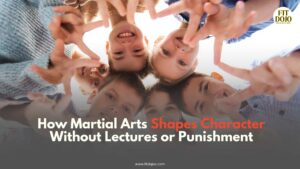
How Martial Arts Shapes Character Without Lectures or Punishment

FIT DOJOS
Expert Team,
FITDOJOS.COM
The Lessons Kids Absorb Without Being Told
Most parents do not want perfect kids.
They want respectful kids. Resilient kids. Kids who know how to behave when no one is watching.
What many parents discover is that lectures and punishment rarely create those qualities long-term. They might stop behaviour in the moment, but they rarely shape character.
Martial arts takes a different path. It teaches values without speeches, discipline without yelling, and responsibility without shame.
If your child is new to training, a structured kids karate program is often the simplest way to build strong habits without making home feel like a constant battle. Character building in martial arts begins with discipline, showing up to train even when motivation is low.
Catchphrase: Character grows through experience, not speeches.
Why Lectures and Punishment Rarely Create Lasting Change
Lectures often sound good to adults, but kids hear them differently. They hear criticism, pressure, and emotional overload.
Punishment may stop behaviour temporarily, but it can also create resistance, fear, or shutdown.
True character is not about avoiding trouble. It is about knowing what to do when choices matter.
That takes understanding, not fear. Character building in martial arts teaches respect, self-control, and humility through consistent practice.
Catchphrase: Behaviour changes when understanding replaces fear.
Martial Arts Teaches Character Building Without Saying the Word
Martial arts does not sit kids down and explain respect for thirty minutes. It builds it into the experience.
Every class reinforces clear rules, consistent routines, fair expectations, and calm correction.
Kids learn how to behave because the environment shows them, not because someone tells them.
If you want to understand how our coaching approach supports this, the Fit Dojo method explains what we prioritise in every lesson. Through repetition and challenge, character building in martial arts strengthens mental toughness as much as physical skill.
Catchphrase: The strongest lessons are felt, not told.
A Real Dojo Story Parents Recognise
A parent once said, “We had tried everything.” Time-outs, consequences, reward charts. Nothing stuck.
Their child struggled with listening and respect, especially when frustrated.
The first weeks of training were uneventful. No miracle. Then small changes appeared.
- ✅ The child waited their turn
- ✅ Accepted correction calmly
- ✅ Stopped arguing reflexively
At home, the same patterns followed. No lecture required.
If your child has first-day anxiety or resistance, this guide on common fears kids have before starting karate helps parents respond calmly and keep momentum.
Catchphrase: Change often starts quietly.
Respect Learned Through Action, Not Commands
Respect in martial arts is not demanded. It is practiced.
Kids bow, line up, and listen when others speak. Not because they are scared, but because everyone follows the same rules.
Respect becomes normal. Character building in martial arts helps students learn responsibility, patience, and focus inside and outside the dojo.
Catchphrase: Respect grows when it is practiced daily.
Responsibility Without Pressure or Shame
Martial arts teaches responsibility gently. Kids learn to remember their gear, follow instructions, and accept feedback.
Mistakes are expected. Correction is calm. This creates accountability without fear.
Kids own their actions because it feels safe to do so.
Catchphrase: Responsibility sticks when kids feel safe to try.
Discipline That Feels Like Routine, Not Punishment
Discipline in martial arts is predictable. Same structure. Same expectations. Same follow-through.
Kids are not singled out or embarrassed. Discipline becomes self-management.
If you are curious how programs build steady habits over time, this overview of kids martial arts programs explains what consistent training looks like.
Catchphrase: Discipline works best when it becomes habit.
Where Self-Defense and Character Building Intersect
Self-defense is not just physical. It is about choices. Knowing when to speak up, when to walk away, and when to stay calm.
Martial arts teaches restraint first. That restraint is character in action.
If you want to see how practical safety skills work outside the dojo, this article on real-world self-defence explains the mindset behind safe decisions.
Catchphrase: Strong character keeps situations calm.
One Credible Stat and Why It Matters
Regular structured physical activity supports emotional regulation and behaviour in children. That matters because character requires regulation.
One credible stat worth knowing is that Australia’s physical activity guidelines recommend children and young people aim for about 60 minutes of moderate to vigorous activity daily.
Martial arts provides consistent structure week after week, which helps kids practise calm responses, focus, and recovery from frustration.
If you want the emotional regulation side explained clearly, read how karate transforms emotional regulation in kids. At its core, character building in martial arts prepares individuals to face life’s challenges with confidence and integrity.
Catchphrase: Structure builds stability.
Why Parents Notice the Difference at Home
Parents often report less arguing, better listening, and calmer responses. Not perfection. Just progress.
Character shows up in tone, posture, and reactions. It shows up in how kids handle frustration and how they respond to correction.
Catchphrase: Character shows up where it matters most.
Book Your Free Trial
If you want your child to build character through structure, movement, and calm coaching, start with a trial class and see how they respond to the environment.
Book your free trial and we will help you choose the right starting point for your child’s age, confidence, and goals.
Want to learn more about who we are and how we coach. Visit About us.
Similar post
September 28, 2026
How Martial Arts Develop Leadership Skills
September 10, 2026
Why Sparring Fear Happens Even When You Know the Techniques