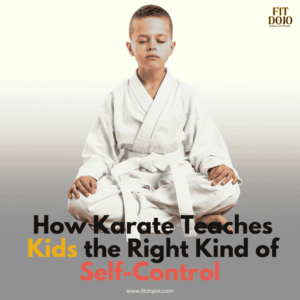
How Karate Teaches Kids the Right Kind of Self-Control (Not Aggression)

FIT DOJOS
Expert Team,
FITDOJOS.COM
Self-Control Skills Children Gain Through Karate Training
If you ask most parents what worries them about martial arts, the answer is usually the same. They are afraid karate might make their child more aggressive.
It is an understandable fear. Kids see action movies. Parents imagine flying kicks in the living room. But in reality, a good karate school teaches the complete opposite. Karate teaches control, discipline and emotional stability, not uncontrolled fighting.
I once watched a nervous dad walk into the dojo and whisper, “My son has a lot of energy. Please do not turn him into a ninja.” Three weeks later that same child was bowing respectfully, standing tall and waiting patiently for instructions. That is the real power of karate.
If you are a parent searching for kids karate in Rockdale, or “karate classes near me,” understanding how karate shapes behaviour is more important than just finding a convenient schedule.
Karate looks physical but it begins with the mind.
1. The Big Misunderstanding About Karate
Most people associate martial arts with punching and kicking. But in every traditional dojo, the first thing children learn is how to control themselves before they ever control a technique.
Kids quickly discover that karate is a system of rules, structure and respect. Instructors repeat the same message constantly. Control your body. Control your thoughts. Control your reactions.
Karate is not about attacking. It is about knowing when not to. Children learn that having the ability to defend themselves does not mean they should go looking for fights.
If you want to understand this culture of respect in more depth, you can read more about Fit Dojo and our philosophy.
Karate looks like fighting from the outside, but inside it is all about control and respect.
2. How Karate Builds Real Emotional Control
If you want your child to learn impulse control, karate is one of the best environments. Every class is designed to challenge their patience, focus and reactions in a safe and supervised way.
Controlling impulses
Kids learn to freeze on command, respond to cues and wait their turn. They cannot simply run, shout or push whenever they feel like it. This skill transfers to school, home and social situations.
Managing frustration
When a child tries a new technique and gets it wrong, they do not get to throw a tantrum and walk away. They learn to breathe, listen and try again. Frustration slowly becomes growth instead of a meltdown.
Calm responses under pressure
Karate slowly introduces controlled pressure through drills and combinations. Children discover that staying calm makes them stronger and more effective. They learn that emotional control is part of physical power.
Structured discipline that actually works
Karate is consistent. Kids know what is expected of them every session. They bow, line up, wait for instructions and follow the rules. This reliable structure builds self control far more effectively than random punishments at home.
Karate teaches kids how to stay calm and steady even when things get challenging.
3. Life Skills Kids Develop Through Karate
Parents often say that karate changes their child’s behaviour in many areas of life, not just in the dojo. That is because the skills they learn are deeply practical and long lasting.
Respect
Kids bow, listen and acknowledge others. They show respect to their instructors, training partners and themselves. Over time, respect becomes a natural habit, not something parents have to nag about.
Focus
Techniques and combinations require concentration. Kids quickly learn to stay present, pay attention to details and follow instructions carefully. This improved focus often helps them in the classroom too.
Self awareness
Children become more conscious of their body, posture and energy. They learn where their hands and feet are, how hard they are striking and how close they are to another person. This awareness makes them safer and more confident.
Confidence without arrogance
Karate gives kids strength, but it also gives them the humility to use it responsibly. They discover that true confidence is quiet. They do not need to show off or prove themselves to others.
Karate builds strong character, not big egos.
4. What Kids Actually Do in a Karate Class
Parents love knowing what really happens in a karate class. Understanding the structure helps you feel confident about what your child is learning.
Warm ups that improve listening
Classes usually begin with warm ups that get the body moving and the brain switched on. Kids respond to commands, follow patterns and learn coordination. They practise listening as much as they practise moving.
Techniques that teach control
Punches and kicks are taught slowly and safely. Children learn accuracy, balance and restraint. They do not simply hit as hard as they can. They are reminded to stop on target, control their power and always train with care.
Partner drills based on cooperation
In many drills, kids work together, not against each other. They learn timing, distance and respect for personal space. They are taught to protect their partner as well as themselves.
Sparring that is safer than parents expect
When children are ready for light sparring, it is controlled, supervised and rule based. They wear protective gear, follow strict rules and stop immediately on command. The goal is not to hurt each other, but to learn awareness, timing and calm reactions.
If you would like to see how these ideas are built into our family sessions, you can explore our parents and kids classes to understand how we train both children and adults together.
Every activity in a well run karate class is designed to build safety, awareness and control.
5. The Truth About Aggressive Kids and Karate
Many parents enrol their children into karate because of high energy levels or emotional struggles. Rather than encouraging aggression, karate helps channel that energy into positive results.
High energy kids become focused
High energy is not a problem in karate. It is an asset. Kids learn when to move with power and when to stand still and listen. The structure helps them direct their energy instead of fighting against it.
Shy or anxious kids become confident
Karate does not only suit bold children. Shy or anxious kids often thrive in the clear, supportive environment of a dojo. Progress is measured step by step, not by natural talent or loud personalities.
Kids who struggle with boundaries gain structure
Children who have trouble with rules at home or at school quickly discover that the dojo is not a place where they can do whatever they like. They learn clear boundaries and consistent consequences, all delivered in a positive and caring way.
Karate does not create aggression. It gives kids a safe structure to transform it.
6. A Real Story From the Dojo
A young boy named Ethan joined karate because he was constantly getting in trouble for pushing at school. His parents were exhausted. His teachers were frustrated. He had plenty of strength but very little control.
In his first class he struggled to stand still for even ten seconds. He fidgeted in the line, rushed ahead of instructions and became upset when corrected. But the dojo did not punish him harshly. It guided him patiently with clear expectations and positive reinforcement.
Within two months Ethan could complete a full drill without losing focus. He learned to wait his turn, breathe when he was frustrated and listen when his instructor spoke. His school teacher later sent a note home saying, “Whatever you are doing, please keep doing it.”
Karate did not magically change Ethan. It gave him the tools to change himself.
Children thrive when they learn control in a supportive and structured environment.
7. Why Parents Choose Karate Over Other Activities
There are many activities kids can do, but karate is unique because it trains three kinds of discipline at the same time. Physical discipline, emotional discipline and social discipline all grow together.
Physical discipline
Kids build strength, balance, coordination and stamina. They learn to move their bodies with purpose instead of sitting still in front of screens all day.
Emotional discipline
Karate helps children practise patience, resilience and emotional regulation. They experience small challenges every class and learn to handle them calmly.
Social discipline
Children learn respect for peers, how to listen to authority and how to work as part of a team. They are reminded constantly that they are responsible for their behaviour and how it affects others.
If you want to see how these skills are applied specifically for younger students, you can take a look at our kids karate classes in Rockdale or explore our little kids karate program for ages that need extra support and gentle guidance.
Karate trains the whole child, body and mind, inside and outside the dojo.
Conclusion
Karate is not about aggression. It is about discipline, confidence and emotional maturity. In a world full of distraction, overstimulation and social pressure, karate gives kids a safe place to learn control, respect and inner strength.
For many families, self defense classes and kids martial arts are not just about learning how to block or strike. They are about giving children the tools to handle real life challenges calmly and confidently.
Karate does not teach kids to fight. Karate teaches them not to.
Similar post
September 28, 2026
How Martial Arts Develop Leadership Skills
September 10, 2026
Why Sparring Fear Happens Even When You Know the Techniques